
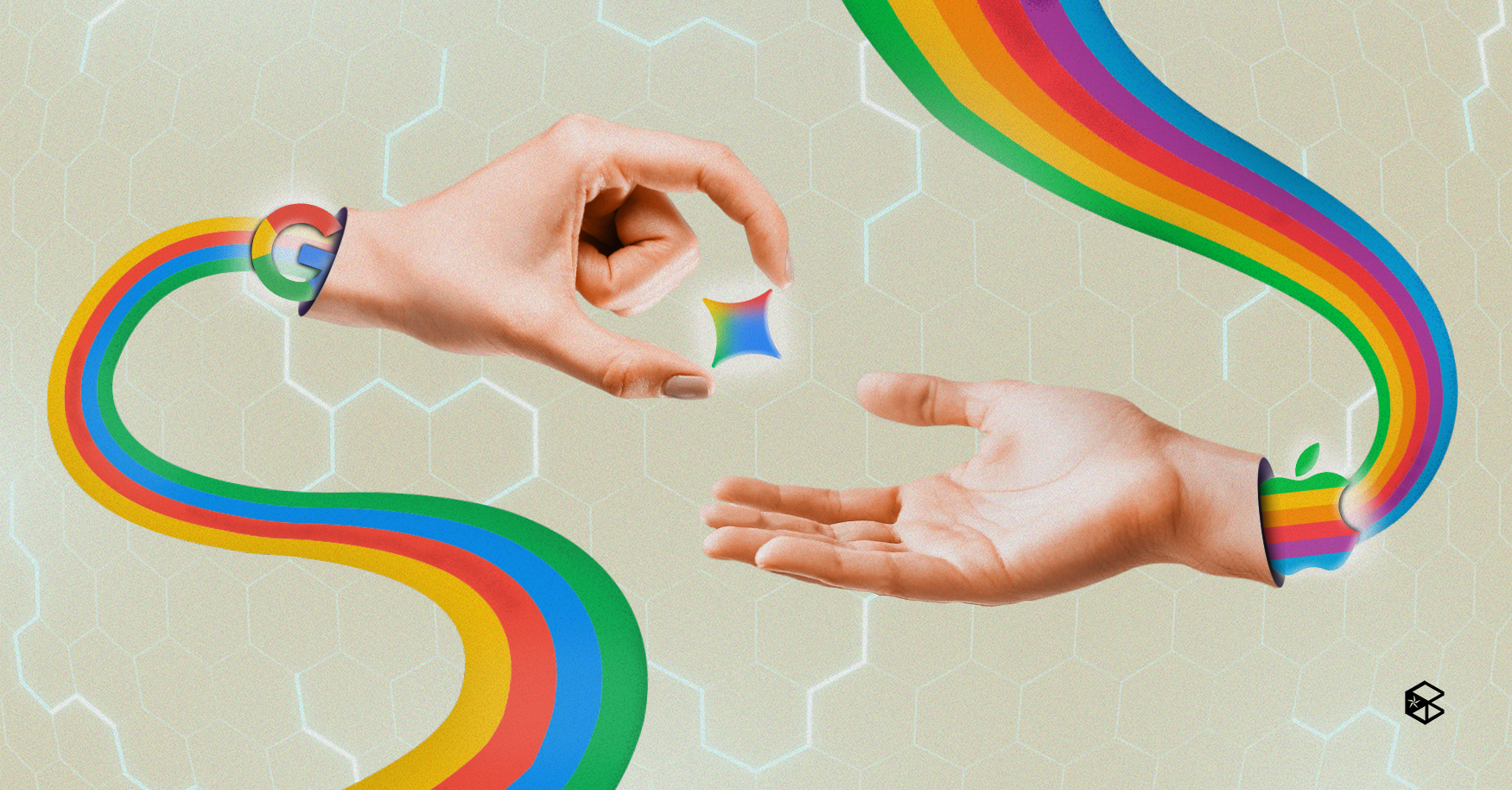




The battle for innovation tightens as the tech industry foregrounds the integration of artificial intelligence (AI) through assistive technologies like Siri. Apple’s ambitious response was the launch of Apple Intelligence, and it now banks on Google’s Gemini to finally deliver.
In a joint statement on Jan. 12, Apple and Google announced a multi-year collaboration that will see Apple’s next-generation foundation models built on Google’s Gemini technology.
The partnership is expected to power long-awaited Apple Intelligence features, including a more personalized, context-aware Siri set to roll out later this year.
The journey of Apple Intelligence
Apple has marked multiple advancements in device innovation, and the announcement of Apple Intelligence reflected its drive for practical, user-friendly technology.
Ahead of its release in October 2024, users speculated how the A17 chip would power Apple Intelligence on its mobile devices. The tech giant introduced AI writing tools, generative photo editing, and enhanced security via Private Cloud Compute.
However, it drew mixed reactions upon release, with some impressed by the assistive AI writing feature, while others sought better Siri performance.
Overall, the technology fell short of expectations, and many found the company’s cutting-edge attempt at assistive technology to be lackluster—creating pressure on Apple to deliver more and deliver better.
Why Gemini
Initially, Apple collaborated with multiple AI companies: OpenAI for ChatGPT integration in iOS 18, where Siri would pass questions it was unable to answer to the model even if the app was not downloaded, and Alibaba in China for regulatory considerations. Despite these partnerships, users found Apple Intelligence and Siri underwhelming.
After a lengthy search that considered OpenAI’s ChatGPT and Anthropic’s Claude, Apple ultimately decided to partner with Google for its Gemini AI technology to revitalize Siri by making it more personalized and context-aware, improving task execution, and expanding generative capabilities for reasoning and content creation.
Operation of collaboration
While specific features for the revamped Siri remain largely rumored, more details could be revealed by the end of February and released in iOS 26.4 around March or April.
In its WWDC2024 announcement, Apple presented a vision for Siri that could understand on-screen content and personal information pulled from sources like messages or emails, perform actions across apps, and offer support for Apple devices. Since then, many of these capabilities have yet to materialize, highlighting areas where the voice assistant has historically struggled.
A key upgrade leverages Gemini’s strength in long-term context, letting Siri remember conversations and understand loosely phrased requests. Support for both text and voice commands could revitalize Siri from a simple voice interface into a more capable personal assistant.
The reimagined Siri was designed to handle tasks such as providing real-time flight information for “Mom” by checking emails and tracking the flight, or playing a podcast a friend had recommended without the user needing to remember the details.
The joint statement emphasized that Apple Intelligence will continue to run on-device and through Private Cloud Compute, maintaining Apple’s existing privacy standards by remaining within its infrastructure. Even with Gemini’s involvement, this collaboration could set a potential precedent for privacy-conscious AI integration.
“Treaty” shaping the future of AI
Apple’s partnership with Google represents more than a technical fix to Siri, given Apple’s gravitation towards controlling its technology. Integrating Gemini suggests that speed to deliver and technological maturity now need to be balanced with independence.
In the AI race, progress is becoming increasingly resource-intensive and fast-moving, making it difficult for any single company to advance alone. Apple’s approach may signal a more pragmatic phase of AI integration, where collaboration is less of a compromise and more of a necessity.
