
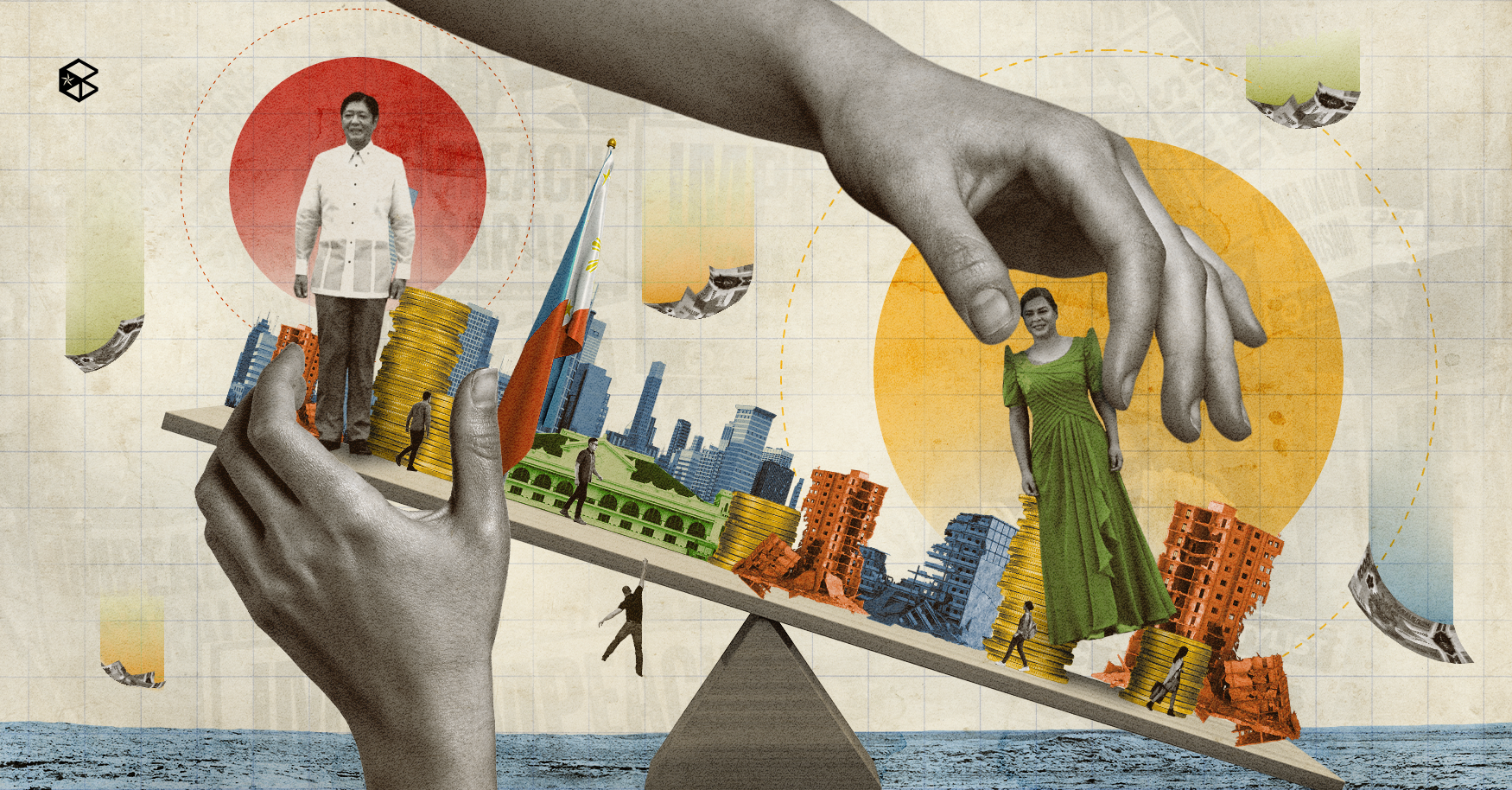




In early 2026, the Philippines witnessed a surge of impeachment complaints filed against President Ferdinand Marcos Jr. and Vice President Sara Duterte. However, the proceedings have sparked widespread debate on probable political instability and broader implications for the country’s governance.
Impeachment is a legal constitutional process designed to remove public officials for serious violations, such as misconduct, corruption, or betrayal of public trust, outlined in Article XI of the 1987 Constitution. Historically, impeachment in the Philippines has been rare, with notable cases such as President Joseph Estrada’s in 2000.
In January 2026, complaints were filed against President Marcos, accusing him of betrayal of public trust and mismanagement. These complaints were dismissed by the House of Representatives as lacking substance, while those against Vice President Duterte were reintroduced in February 2026 after being dismissed as unconstitutional after the first filing of the Makabayan coalition and the coalition of Tindig Pilipinas.
The second filing for Vice President Duterte’s impeachment was approved by the House of Representatives’ Committee on Justice without objections during their initial deliberations in early March 2026, finding it compliant with constitutional requirements.
Two complaints were submitted separately on Feb. 9 by Fr. Joel Saballa’s group with Mamamayang Liberal representative Leila de Lima’s endorsement while another on Feb. 18 by lawyer Nathaniel Cabrera endorsed by House Deputy Speaker Paolo Ortega and Manila Sixth District representative Bienvenido Abante, Jr.
Meanwhile, an earlier filing by the Makabayan bloc was excluded in the proceedings following the July 2025 Supreme Court ruling stating to “not commence impeachment processes earlier than Feb. 6” as their refiling was done on Feb. 2, four days before the allowable period. On the same day, the impeachment filed by Tindig Pilipinas was formally withdrawn, citing reasons of “procedural expediency.”
Cebu Province Governor Pamela Baricuatro, weighed in on the potential negative impact of impeachment proceedings on the country’s reputation and economic stability during an interview. “It’s bad for the international press. It will hamper the economic programs of the government.”
Moreover, she advocated political neutrality in line with Section 4, Subclause D of Republic Act No. 6713, mandating public officials to serve without discrimination based on political affiliation, stating that she must work with leaders from all political parties as governor and expressed opposition to impeaching any official.
Former Deputy Governor of the Monetary and Economics Sector for the Central Bank of the Philippines Diwa C. Guinigundo also posed in his article that our slow economic progress is structurally due to both governance failures and chronic underinvestment in social services.
“Markets are often less forgiving when institutions appear unwilling or unstable to enforce rules consistently,” he wrote.
Further concerns about instability
While government officials have warned about the economic and political consequences of impeachment proceedings, a legal expert also pointed to the overlooked political dynamics shaping the process.
In an interview with The Benildean, Deputy Director for Youth of the Integrated Bar of the Philippines (IBP-RSM), Attorney Earl Guen Q. Padayao, discussed the risks and implications of politicizing impeachment proceedings. He stated, “Impeachment proceedings can be politicized because the people who participate in that exercise [...] are all political animals.”
Atty. Padayao explained that the House of Representatives initiates impeachment and later acts as prosecutors, while the Senate serves as the impeachment court. However, despite acting as prosecutors and judges, lawmakers remain political actors who maintain alliances with the executive branch.
“Political animals need to maintain good relationships with Malacañang […] and other powerful entities. They need to be [on] the good side of the president to make things happen for their interest,” he stated.
Furthermore, Atty. Padayao challenged the idea of upholding impartiality and political neutrality, emphasizing that “political neutrality is a misnomer” as politicians are “partisan by nature,” and the only way for their initiatives–such as the impeachment–to be approved and thus executed is through garnering political allies.
Atty. Padayao concluded that “the risk of the proceedings to be perceived as politically motivated is very high because Inday Sara already declared her bid for presidency [...] She's the frontrunner across the board in multiple publications or surveys. So, if the elections are to be [held] today, she's going to win. Her public relations team and political team will try to frame that as if all the attacks against her, including a legitimate impeachment proceeding, is mere politicking.”
He also shed light on mitigating the socioeconomic underinvestment by both local and foreign investors. In order to boost investor confidence, he suggested that the impeachment should not only be branded as a “crusade for accountability and against corruption,” but to prioritize prosecution of those involved in the flood control scandal.
The bigger picture
Impeachment is meant to hold public officials accountable, but its consequences extend beyond the removal of one leader. It can deepen political divisions, erode public trust, and draw attention away from governance. When proceedings drag on, policy action slows and efforts to address jobs, public services, and development suffer, increasing the risk of socioeconomic instability.
Yet, failing to pursue impeachment when warranted can be equally damaging. It may allow corruption to persist, weakens institutions, and undermines public welfare. In this sense, impeachment is consequential not only as a constitutional process, but as a political crisis that, whether prolonged or withheld, can deepen instability and worsen social and economic conditions.
The presidential impeachment complaints have tested the Philippines’ democratic systems. On one hand, there are concerns that impeachment proceedings could destabilize the country and harm the economy. Meanwhile, there is a pressing need for balancing economic stability with transparent governance.
The Philippines must strengthen its systems of accountability to ensure investigations are conducted fairly, transparently, and efficiently. At the same time, leaders must avoid using impeachment as a political weapon, as it is a legitimate and necessary mechanism in upholding the rule of law.
Only through stability with accountability can the country maintain its democracy and strengthen its institutions.
