




I reach him in the afternoon. There is more than enough of everything at this time of day. The sunlight spilling across metal jeepney roofs and sweaty shoulders, the dust and sugar, and the smell of something frying hanging in the air.
Yet out of the abundance, I once again chose his stall. The rickety stall where vegetables are never arranged, and tomatoes press into each other. The greens lie in uneven bundles, still damp from what must have been a recent washing. The one where fruits seem almost too ripe, their sweet skins stretched thin, as if they might burst open just from being looked at. Behind this small kingdom of produce—pyramided lemons and calamansi mountains—he stands alone.
The only solitary figure amidst all the excess. But if he’s bothered by it, it doesn’t show. Before I get the chance to speak, his hands are already in a motion of scooping, weighing, and adjusting a scale. As he reaches for another basket, a pile of chilies tips over and scatters across the ground.
“You’re rushing again,” I say as I crouch to help him. “Learn to slow down. You're not as young as you used to be.”
He doesn’t answer. Instead, we gather the fallen chilies together, bright red against the dust, one by one. When he finally looks at me, and my chili-filled hand, it doesn’t last. His gaze settles, then slips, falling somewhere far behind his brown eyes.
I tell him what I came for.
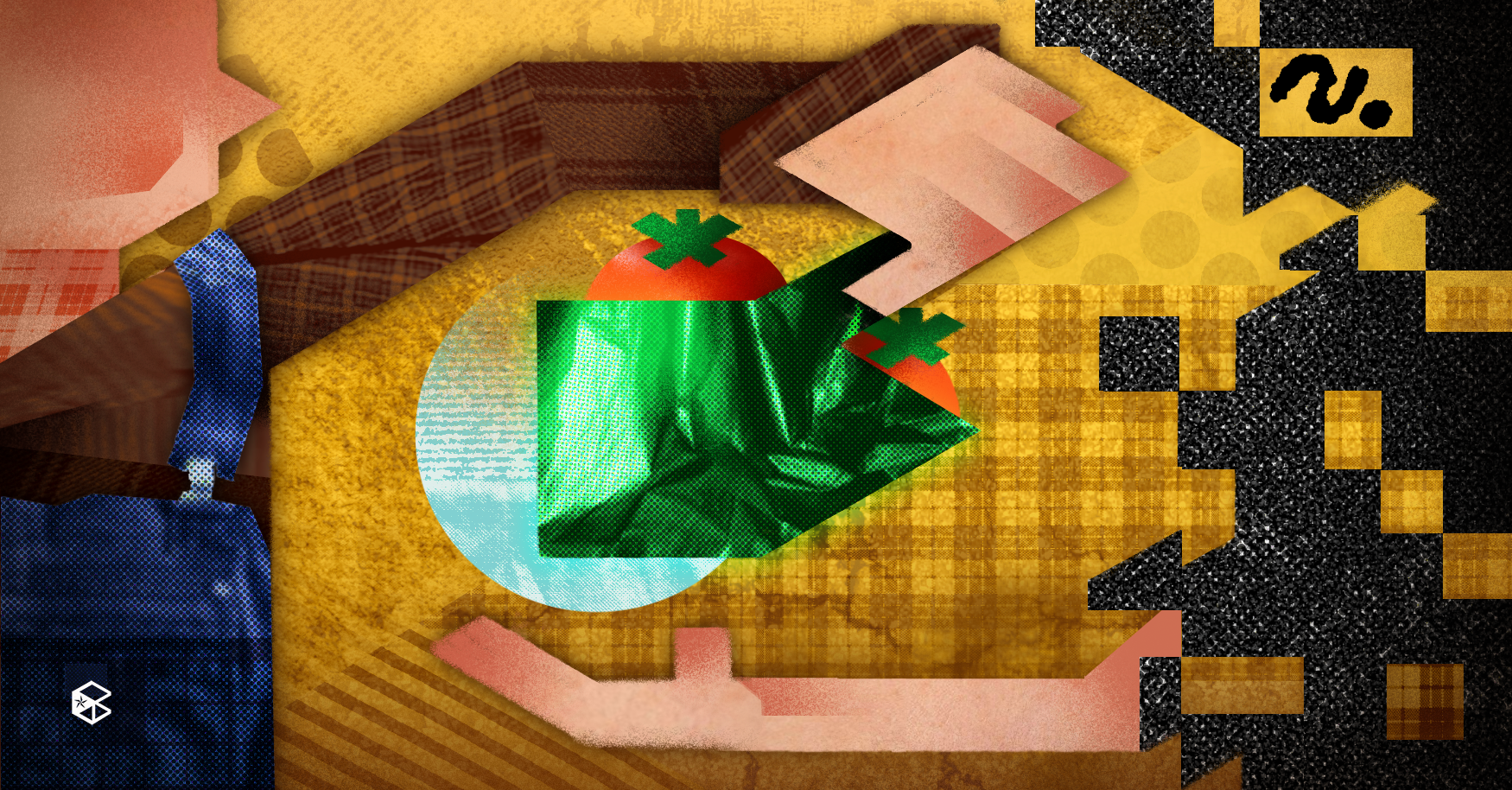
He nods, weighs it, then adds something extra—a tomato. This always happens; sometimes it’s one, sometimes it’s two. I never ask him about it, so as to keep receiving his small kindnesses. The exchange is always the same, but never exactly the same twice. Some days, he greets me like an old friend. Other days, like he is relearning my face, which by now feels like he has relearned me a hundred times over; which also means he’s also forgotten just as much.
“I’ve been coming here,” I said on one of the countless afternoons spent in his stall. He tilts his sun-browned head slightly; the few white hairs he has left stand like worn bristles. It is always this time of day that everything feels soft like an oil painting.
“Have you?” he asks, not unkindly. Just unsure. And I decide that is somehow worse.
I wonder if it’s the hour that makes everything blur at the edges like this. Maybe it’s the unshed tears I get when I'm with him, turning the world into something half-painted, still drying in the light. Then, after a pause, he says, “You look familiar.”
Another afternoon, he ties my bag twice, then stops. He unties it, then reties it slowly, leaving it slightly loose. I tease him about his precision. “Relax. It’s just a knot.”
He pauses, fingers still on the loops. “I used to rush,” he says. And then, almost to himself, “Someone told me to slow down.”
He doesn’t finish the thought.
The sun had begun to soften, and around us the metal shutters of surrounding stalls were rolling down, the chatter of vendors fading into a shutting of doors. But he stays, even as all the light leaves. So I ask him what time he closes.
“10,” he says. He keeps working as he answers. Habit pulling his hands into motion even when there’s nothing more to do. “Someone might still come.”
That evening, he layers my bag twice, then a third time, then a fourth, tying each knot tighter than the last. I look into his eyes as he begins to reach for a fifth, and tell him it’s enough. He pauses. The motion has only just caught up to him. His hands hover above the plastic, uncertain, as if they no longer remember what they were doing or worse—that they have already done it.
For a moment, he looks at the bag as though seeing it for the first time. Then lets it be.
That night, I go home to cook. I set my plastic bag down with the rest of my vegetables—it is heavier than it should be, but not because of the produce inside it. My hands move instinctively. I put my apron on. I tie it. I undo it, then tie it again—looser this time. The kitchen is quiet except for the sizzling of the pan. I reach over for a bowl of chopped garlic and clumsily nudge it off balance. It tips, rolling onto its side just enough to startle me before settling again. I steady it with shaky breaths.
I stop for a moment. And look down at the meticulously tied knot of my apron, then up at the bowl of garlic, secure between my hands. I can no longer tell where his habits end and mine begin.
“Someone might still come.”
I let myself wonder if he means me—or whatever version of me he still remembers. Maybe it’s the me he taught to tie my shoelaces. Or me, the clumsy child, who used to knock over his stack of displayed fruits. Or the me who used to come home late at night from school.
I wish he could remember me now—the one he sees every afternoon.
