




May is National Heritage Month, a time meant for Filipinos to celebrate the things that make them distinctly ours. These days, however, the celebration has increasingly been arriving in the form of curated drops and “Filipino pride” products that look like they were made for a far more comfortable cosmopolitan taste rather than the local reality.
Heritage, once lived and unremarkable in its everydayness, has become something you now apparently have to purchase through limited release. The branding of such products claims that this is for us, but the price tag seems to say otherwise. Filipino culture has been commodified into an aesthetic and sold back at a price point that excludes the very people they claim to represent. And, when pride has a paywall, it begs the question: whose celebration is this really for?
Once forgotten, now made to be sold
For most of the 20th century, being Filipino was something to assimilate away from because centuries of colonial rule—Spanish, Japanese, and American—systematically taught Filipinos that their own culture was primitive and inferior. American colonization in particular embedded Western standards, often termed as colonial mentality, so deeply into everyday life that many Filipinos learned to see their own culture through the eyes of the colonizer.
With the rise of globalization and the collapse of colonial rule, it makes sense, then, that patriotic reclamation would eventually come. Globally, marginalized cultures have found power in turning their heritage into something visible and celebrated—with Filipino identity following that current. Eventually, what followed was a rebranding of culture wherein the same aesthetics that were once dismissed have now become desirable. A wave of heritage-based branding rose to prominence with an appearance so distinctly Filipino—the muted colors, Baybayin scripts and a random deep Filipino word like hiraya, dugong, or marahuyo.
But the consumers these brands actually reach paint a different picture. These products are priced for consumers with disposable income—and often, a distant ocean separates them from the homeland they're buying into. Thus, these products circulate in a world far removed from the everyday Filipino experience—a souvenir of a culture that never left, sold to those who did.
The price of representation
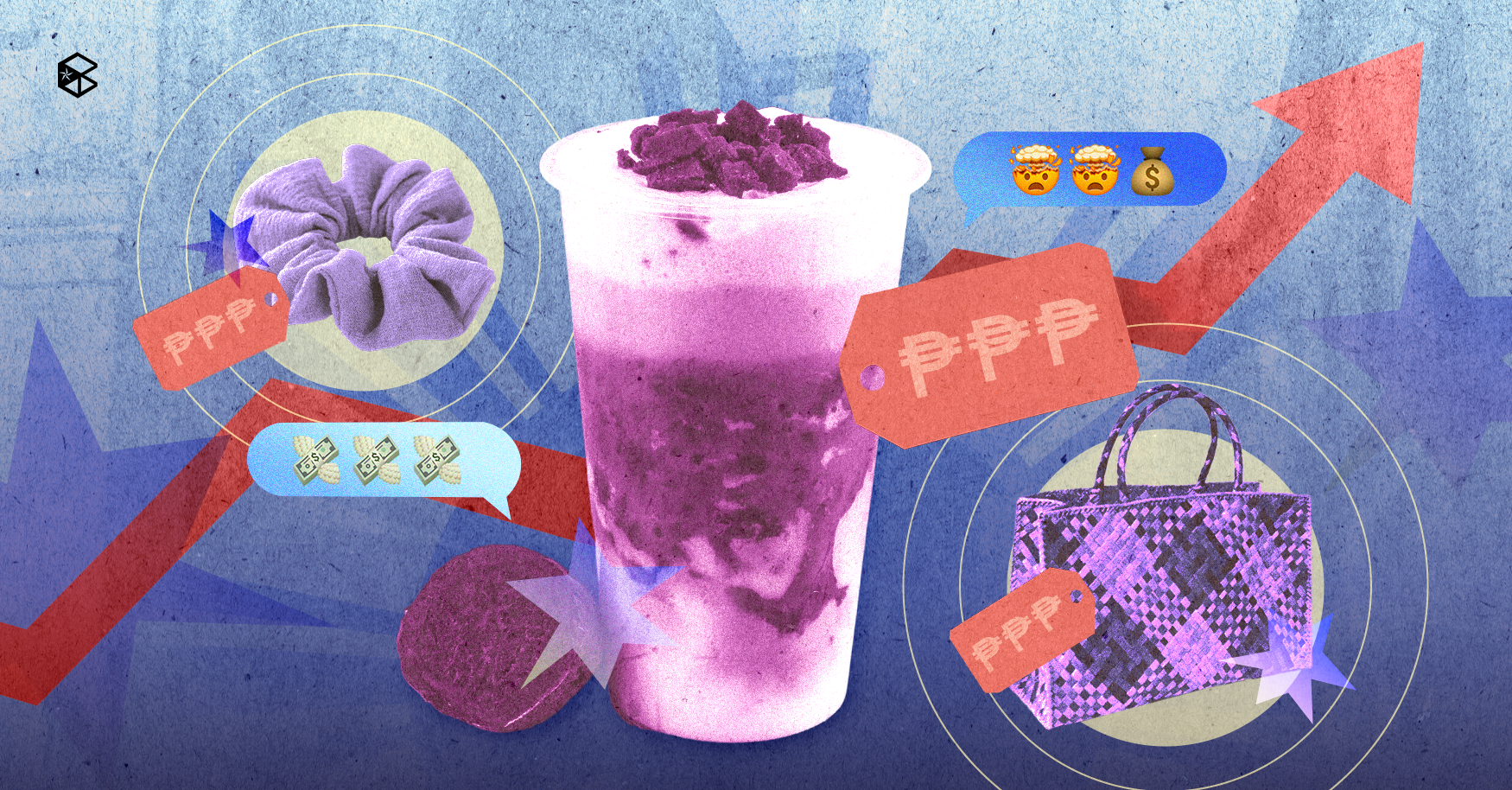
The issue is not that these brands exist because frankly, visibility matters. The issue is the gap between who they claim to speak for and who they are actually built for. Heritage branding markets itself on belonging—on the very idea that buying into the aesthetic is framed as a way of connecting with the culture. But when the entry point is a ₱2,000 scrunchie or a $20 jar of oob (ube) halaya priced beyond what most Filipino households spend on a week of groceries, the belonging being sold now becomes inaccessible to everyone.
In a process resembling cultural gentrification, Filipino culture is repackaged and sold back at a markup that excludes the people who have been living it all along. Ube, once a staple so ordinary it appeared at every family gathering without fanfare, is now a $5-per-pound export, a limited-edition Trader Joe's drop, and a TikTok trend.
These brands originate from the founder’s passion to showcase Filipino pride and to fill a gap in representation they personally felt. Sincerity, however, does not resolve a class contradiction as a brand can genuinely love Filipino culture and simultaneously still build something that the majority of Filipinos cannot access. Calling that representation is a contradiction because one cannot claim to represent people while pricing them out of the room.
There’s also this assumption that Filipino culture needs to be made palatable by making it more premium-coded, and presentable to a global market before it is worth celebrating. That the version of Filipino identity worth selling is the one processed through the lens of Western taste, which in other words, is purely just colonial mentality running the same old play,
When it comes back with interest
Much like a balikbayan box, the effects of this logic does not stay overseas—it gets shipped back home. When Filipino culture gains visibility only after being repackaged for a Western audience, it reshapes what counts as valuable at home. Local brands notice what gets celebrated overseas and begin to follow the same logic as many have been conditioned that external validation is the standard of worth.
It’s ironic in a sense that Filipino culture, once dismissed by decades of generations as “too tacky” or “not refined enough” is now being celebrated, but only after it's been aestheticized and watered down.
The mindset inevitably trickles into local Filipino businesses themselves, encouraging them to frame Filipino identity through the same aspirational lens. Brands like Sunnies, for example, built appeal around minimalist aesthetics and Western-coded sophistication by selling a curated version of modern Filipino identity that feels globally acceptable. Heritage-based branding follows a similar pattern, wherein Filipino culture itself becomes the aesthetic being packaged, with local culture becoming something curated rather than simply lived by.
There’s a reason these brands resort to English because the Filipino experience they are celebrating was always meant to be read by someone looking in—and not someone already living it. The uncomfortable truth is that the culture gaining value at home often still depends on gaining traction abroad first, meaning that pride even now, is still waiting on outside permission to exist.
Seeing Filipino identity celebrated openly now carries real significance. There is value in reclamation, even when imperfect. Representation cannot be measured solely by affordability because many of these brands emerged from a genuine desire to reclaim heritage, create visibility, and give Filipino identity a presence in spaces where it had long been absent.
But visibility alone cannot be the endpoint of cultural pride if the people being represented remain excluded from the representation itself. A culture should not need to be filtered through Western aesthetics or global approval before it is considered worthy of celebration. If reclamation means anything beyond branding, it must move beyond performative pride and towards accessibility and inclusion. Otherwise, what is being sold is a polished version of identity still shaped by the same colonial logic it claims to resist.
For the month of May, the Philippines celebrates its pride in the country’s heritage, but pride that has a paywall is a product—and the culture deserves better than being sold back to itself.
