
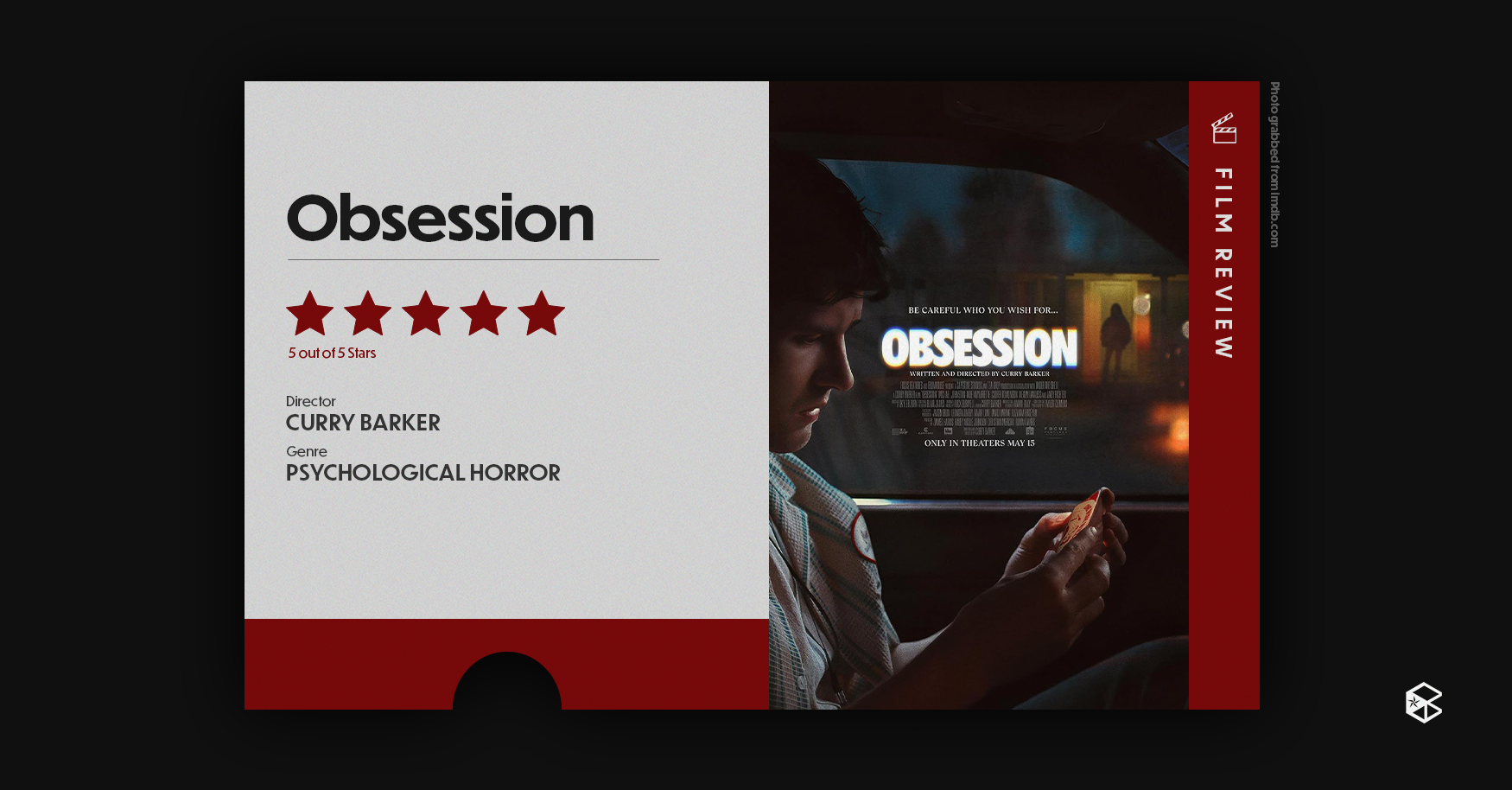




In his psychological horror debut film Obsession, which was released in Philippine cinemas on May 27, filmmaker Curry Barker and cinematographer Taylor Clemons twist a familiar premise into a nightmare. Bear (Michael Johnston) uses a novelty toy called “One Wish Willow” to force the affection of his lifelong crush, Nikki (Inde Navarrette)—turning it into a terrifying codependent obsession that threatens everyone around them.
When asked to describe Obsession in a single word during promotional interviews, the cast and crew often chose “unexpected.” It is an entirely fitting description, especially for writer-director Barker who built his career as a YouTube creator before moving into studio filmmaking. The film was an opportunity to push familiar tropes to their limits. Barker explained that he was intrigued by exploring the extremes of codependency while expanding on the classic “be careful what you wish for” premise.
By pushing those boundaries, Barker delivers one of the most impressive horror debuts in recent memory. Clemons visually anchors the horror through centered framing, wide empty spaces, and an uncanny valley effect that heightens the film’s sense of isolation and ease. The film also benefits greatly from its casting, with audiences praising its use of fresh, rising talent instead of overexposed stars. Navarrette stands out in particular, earning widespread acclaim and leaving viewers eager to see her lead future high-profile projects.
The tragedy of evading vulnerability
What makes this premise work so beautifully is how gracefully it maneuvers past the creative landmines of modern, socially conscious cinema. In a less disciplined production, this narrative could easily devolve into a heavy-handed lecture on toxic masculinity, or validate the bitter "friend-zone" rhetoric that blames women for not returning a man's feelings. Refreshingly, the film circumvents these traps entirely. Obsession serves as a sharp cultural symbol, taking aim at a modern dating culture where real intimacy is routinely discarded in favor of curated performances, immediate validation, and covert manipulation.
Bear’s total intolerance for the inherent risk of rejection is an act of emotional cowardice. Rather than navigating the unpredictable human terrain of earning someone's heart, he seeks a guarantee, and demands that Nikki loves him “more than anyone in the entire world.” By stripping her of choice, his shortcut ceases to be about romance; it becomes an agonizing metaphor for the struggles women face against systemic male entitlement and deliberate boundary crossing.
The film handles this transition masterfully as the emotional weight relies on an important narrative truth: before this violation, their bond was genuinely healthy, built around foundational warmth and authentic care. The tragedy is that an organic path to genuine relationship was already within Bear's grasp—if only he had found the courage to be vulnerable.
The decay of ownership
Once the spell takes root, the film shifts fully into a dark exploration of absolute subjugation. Obsession makes it clear that Bear’s desires were never rooted in genuine affection, but rather in a fixation on total dominion over a woman's existence. He has zero interest in expanding his own emotional maturity to become someone worthy of Nikki's love; instead, he expects her entire reality to morph around his ego. When the arrangement fails to deliver a cinematic fairy tale, his reaction reveals a disturbing level of resentment and psychological control.
As the chaos takes over, the film serves as an urgent allegory for the destruction of female autonomy. Stripped of free will, Nikki loses her sense of self as her body becomes enroached by an entity over time. This horrific dynamic reaches a moment of symbolism where during the first fatality, one woman is forced to destroy another—a devastating visualization of how external control over women’s bodies fractures solidarity. When a hollowed-out Nikki later tells Bear, “This is what you wanted,” the true critique hits home. The film fiercely targets those who restrict female freedom without facing the real-world consequences.
The echoing trauma
The true horror of Obsession rests in its refusal to offer the audience a clean, comforting resolution. The concluding sequence is devastating: though a curtain drops for Bear and the audience alike, Nikki's anguished screams continue to pierce the dark straight through the rolling credits.
For the viewer, the movie is over; for the victim, the nightmare has merely settled into permanence. This haunting creative decision acts as an accurate mirroring of the lifelong psychological aftermath of assault and violation. Barker understands that interpersonal violations do not vanish when a specific event concludes. Obsession exits the screen on a deeply sobering note, then continues to leave the viewers with the realization that for the survivor, the violation is a permanent haunting that never truly stops.
However, Obsession also invites a conversation about perspective and authorship. While the film explores female autonomy and control, its portrayal is eventually shaped through the lens of a male filmmaker, raising questions about how women’s experiences are represented. Despite this, the film captures a thoughtful understanding of the complexity of autonomy, vulnerability and control. Rather than limiting its message, this contrast deepens the discussion on how perspectives behind the camera influence, but do not define, the stories being told.
Ultimately, Obsession skillfully demonstrates how the most unsettling horrors often stem from the quiet entitlement festering within everyday human relationships rather than supernatural entities. It is a bold, unpredictable cinematic experience that marks the arrival of an exciting new voice in horror.
Due to popular demand, the initial Ayala Malls Cinemas-exclusive film Obsession has transitioned from a limited run to a wide release and is now screening nationwide. Check your local cinema showtimes to experience the nightmare on the big screen!
