




For over a century, the National Collegiate Athletic Association (NCAA) has been a cornerstone of Philippine collegiate athletics, showcasing the caliber of dedication and skill. Beyond the race for gold and glory exists a different struggle—one defined by more than just final scores or accolades. For various LGBTQIA+ athletes, competing also means navigating expectations about who belongs in sports and how they are expected to express themselves.
Across the sporting world, LGBTQIA+ athletes have challenged traditional ideas about gender and athleticism. More athletes are choosing to compete openly as members of the LGBTQIA+ community, while leagues and institutions have gradually adopted policies promoting diversity and inclusion. Even so, greater visibility has not eliminated discrimination.
As the NCAA evolves, the question remains whether the league can match that resilience with meaningful change.
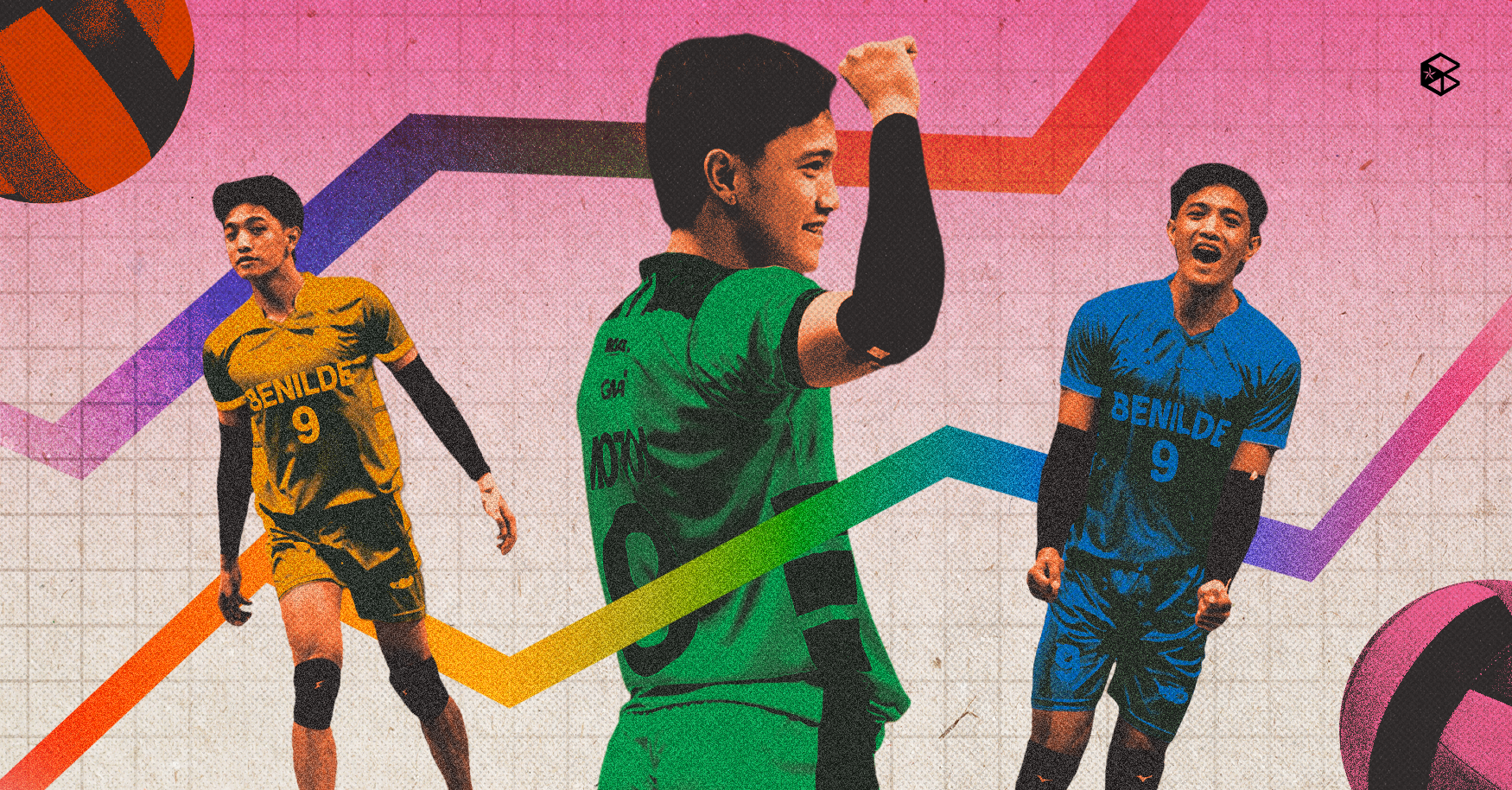
For Benilde Blazing Spikers’ back-to-back Best Outside Spiker and NCAA Season 101 Champion, Rocky Motol, these experiences have become a part of his collegiate journey. What began as a childhood game played with his friends using a makeshift rubber garter net, eventually led him to play in the NCAA while navigating his journey as an openly gay athlete.
Motol’s story reflects the changing landscape of Philippine collegiate sports. While LGBTQIA+ athletes have become more visible in recent years, visibility has not necessarily translated into complete acceptance.
Identity under pressure
In an exclusive interview with The Benildean, Motol shared how he first struggled to come out to the team. “Nung una nahirapan ako mag-out sa mga kasama ko. Lalo na sa school kasi lahat ng mga nakilala ko parang feel ko against sila sa mga [LGBTQIA+]. ‘Yung mga iba naman na nakilala ko na, kaya nag-out na [ako]. Pinapakita ko sa kanila kung sino ako, nagagawa ko naman.”
Although acceptance has grown over the years, sports remain shaped by traditional ideas of masculinity, where sexuality is sometimes used to question an athlete's strength or place within the game. Former Ateneo de Manila University (ADMU) Blue Eagles Rex Intal revealed to Tiebreaker Times that bullying nearly drove him away from volleyball, highlighting how prejudice can affect athletes.
Motol admitted that he still feels judged during competitions. “Lagi ko[ng] nafi-feel ‘yan pero laban lang, dedma talaga. Lalo na ‘yung kapag maraming tao tapos mas [maraming] support ‘yung kalaban niyo kaysa sa support sa team. Parang nafi-feel ko [na] maraming nang-jujudge sa akin.”
Rather than letting those experiences define him, he chose to focus on himself. “Dedma. [Sa] mga pinagsasabi nila, dedma ako kasi ‘di naman nila ako kilala eh, mas kilala ko ‘yung sarili ko.”
Behind Motol’s confidence on the court lies a support system that allowed him to embrace his identity beyond the game.
Motol’s family has consistently fostered a safe environment where he can openly express his identity and feel fully accepted for who he is. Beyond his family, he also found support in close friends like former De La Salle University (DLSU) Green Spiker Noel Kampton, who opened his home to Motol and became their confidant in applying to Benilde. Motol also shared that he never had to hide who he is on and off the court, which allowed him to fully embrace his identity in and beyond the game.
Changing the playbook
Mr. Manuel Raymund “Dax” Castellano, the NCAA Management Committee Representative for Benilde, shared in a written interview with The Benildean that the NCAA continues to foster an inclusive space for all stakeholders involved in the league.
In his experience working with the NCAA for over a decade, Mr. Castellano said he has witnessed clear progress in how LGBTQIA+ student-athletes are perceived and treated in the collegiate association.
“Personally, I haven't encountered major issues involving LGBTQIA+ student-athletes. From what I've seen, the NCAA continues to [be] more inclusive, and athletes, coaches, and employees are generally treated with respect regardless of their gender identity or sexual orientation,” he shared.
Growing awareness surrounding inclusion has greatly contributed to a more welcoming atmosphere across NCAA member-schools, as institutions also uphold their own anti-discrimination policies.
Carrying the torch forward
Motol stressed that embracing openness and acceptance of LGBTQIA+ athletes is essential in building a safe, empowering, and equitable community for all. Moving forward, he emphasized that it is important to ensure equal opportunities for everyone, regardless of gender, so that all athletes can freely participate and excel in their sport.
Mr. Castellano highlighted the importance of investing in continuous education and training for team staff and NCAA personnel.
“I hope that every student-athlete can compete without ever feeling the need to hide who they are. In the next three to five years, I'd like to see a clear NCAA inclusion framework, mandatory welfare, and inclusivity training for everyone involved in sports, and facilities that provide privacy and comfort for all athletes,” he explained.
Despite persistent challenges, LGBTQIA+ athletes continue to show resilience and courage, as a testament to their character and the strength of the community. As the NCAA and its athletes continue to push boundaries, we must recognize that true progress demands more than individual grit. The onerous task of progress cannot rest solely on the athletes; institutions must rise to match their players' courage by actively dismantling the systemic bigotry that still remains. Only then can sports achieve its true purpose: a playing field where every individual, regardless of gender or sexuality, is fully embraced and free to thrive.
