
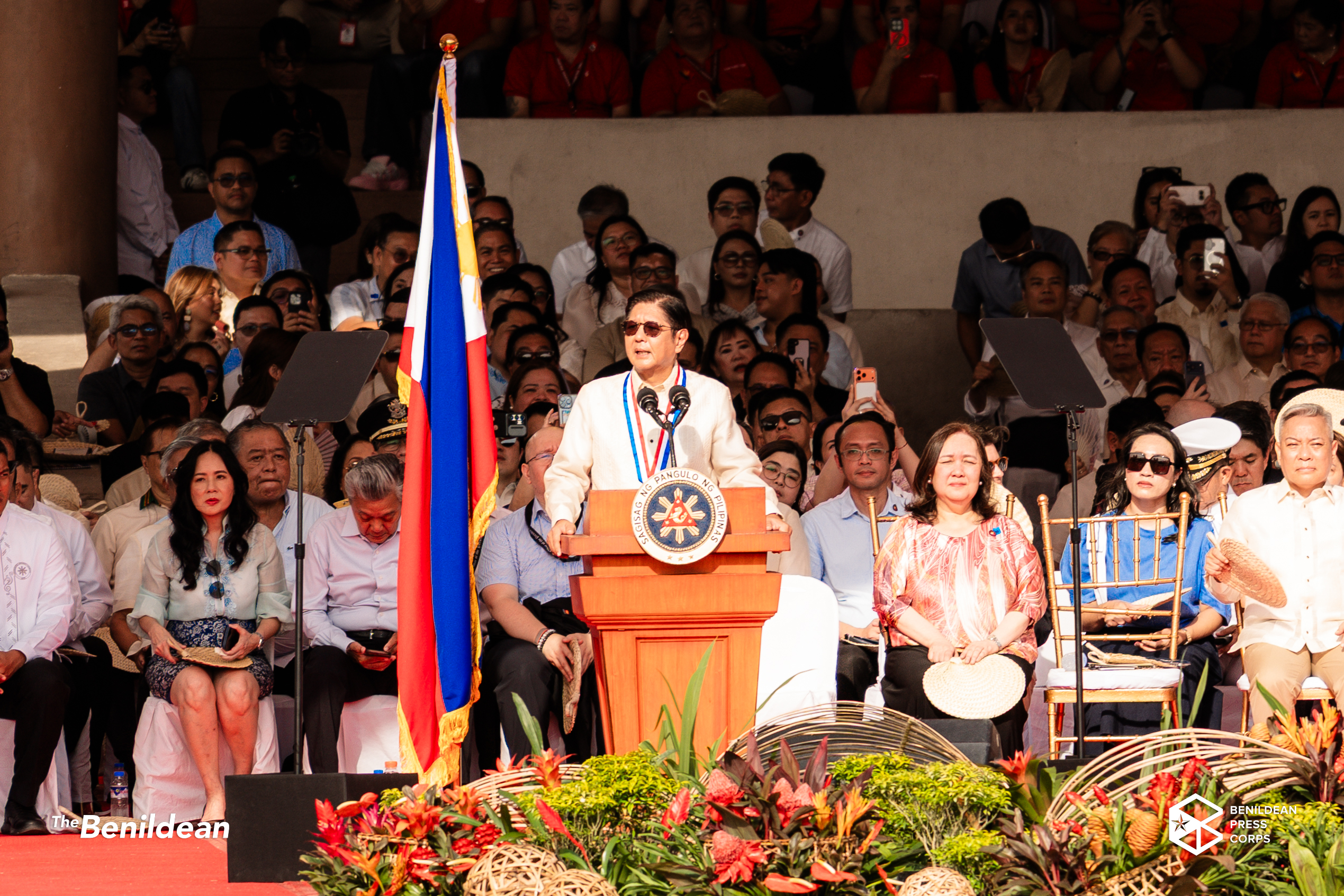




The 128th Philippine Independence Day commenced with the theme, “Kalayaan. Kinabukasan. Kasaysayan,” along the streets of Rizal Park and Quirino Grandstand on June 12, with a flag-raising ceremony, military parades, and artistic performances observed by government agencies, socio-civic organizations, students, and citizens.
In preparation for the program, cadets from the Philippine Military Academy (PMA) and Philippine National Police (PNP) Academy marched to Rizal Park, where department secretaries and their staff also gathered to welcome President Ferdinand “Bongbong” Marcos, Jr. and First Lady Liza Araneta-Marcos.
The program formally began with a flag-raising ceremony led by President Marcos, his first family, National Historic Commission of the Philippines Chairperson Regalado Trota Jose, Jr., Manila City Mayor Francisco Moreno Domagoso, and Armed Forces of the Philippines (AFP) Chief of Staff General Romeo Brawner, Jr., followed by the singing of the Philippine national anthem.
This was followed by the Pledge of Allegiance to the Philippine Flag by Girl Scouts of the Philippines (GSP) Central Luzon Regional Cadet Representative Queen Hannah Diana Ruth Magusib, “Bagong Pilipinas” hymn by the Philippine Charity Sweepstakes Office Choral, and “Bagong Pilipinas” pledge by Boy Scouts of the Philippines National Capital Regional Scout Representative Emmanuel Magpali.
President Marcos, Chairman Jose, and General Brawner laid floral wreaths at Rizal's monument. The program continued at the Quirino Grandstand where multiple performances took place.
In a speech honoring the nation’s heroes, President Marcos highlighted the Katipunan’s historic unity against Spanish rule while warning that modern independence faces threats from climate change, global instability, corruption, and poverty.
Despite these challenges, he expressed firm belief in the resilience of the Filipino people, urging them to choose what is best for the country, “Remember that the peace, independence, and freedom today cost the blood of those who came before us.”
Following the speech, a military parade showcased various government agencies and their official vehicles dedicated to national security and sovereignty. The presentation comprised the AFP, including its army, navy and air force branches, alongside the PNP and its operational support units, the Philippine Drug Enforcement Agency, the DILG’s Bureau of Fire Protection and Bureau of Jail Management and Penology, and the DOJ’s Bureau of Corrections.
The program concluded with artistic performances of songs, traditional and modern dances, and dioramas showcasing Philippine history and culture from pre-colonial and Spanish times to the modernization era and the present-day ASEAN Chairmanship. Performances were narrated from the perspective of a Sarimanok soaring for freedom, where transitions were filled by marching band performances from Banda El Governador from Cavite, Banda San Jose from Las Piñas, and Banda 85 from Bulacan.
In an interview with The Benildean, Nicanor Enano, a member of the National Eagle Scout Association of the Philippines (NESAPh), underscored the importance of Independence Day, not only as a tribute to the past, but as a reflection of the present—forging a promising future for the country.
“Sa nangyayari ngayon sa Senate o dito sa bansa natin, ang pagiging malaya natin is pwede natin ipakita sa susunod na eleksyon at ihalal o iluklok ang karapat-dapat sa posisyon.” He emphasized.
The Eagle Scout hopes the youth will be inspired by Independence Day to become active citizens and service leaders of the country. “Hindi lang naman ang pagsisilbi sa bayan is military. Napakaraming form of community service sa bayan kagaya ng scouting, church, and sobrang dami pang iba.”
Meanwhile, as the recent political climate of the Philippines has paralyzed institutional processes, it has left concerns among the masses whether there is still “true freedom” across the nation.
When asked if the country still carries the power of freedom, Mary Blezzy L. Cariño, a Camping Committee Member of the GSP Pangasinan Council, mentioned the lack of control surrounding the government, including the impeachment trials and corruption as systemic issues.
“Parang nakakalungkot na hindi na gano’n kalaya ang [mamamayan ng] Pilipinas na gawin kung ano ang kaya nila kasi parang nalilimitahan na tayo dahil sa mga resources natin na hindi na sapat." Cariño sympathized with her fellow Filipinos.
Freedom carries a multitude of meanings for different individuals, Cariño believes that it goes beyond actions without limitations and defines it as the capacity to achieve unity, “Siguro ang kalayaan na maipapakita na nagkakaisa ang mga tao sa Pilipinas.”
Cariño likewise emphasized her vision of a unified nation where one can be free to speak, think, and act, regardless of differences.
With the Philippines marking its 128th Independence Day, the celebration unfolded amid ongoing political controversies, including debates surrounding Senate proceedings and broader concerns over governance and accountability.
Beyond the present political climate, the commemoration also served as a tribute to the generations of Filipinos who fought and sacrificed for the nation’s sovereignty. Their efforts paved the way for the freedoms enjoyed today, reminding Filipinos that Independence Day is not only a celebration of the country’s past, but also an opportunity to reflect on the continuing task of safeguarding the values and institutions for which these heroes gave their lives.
