
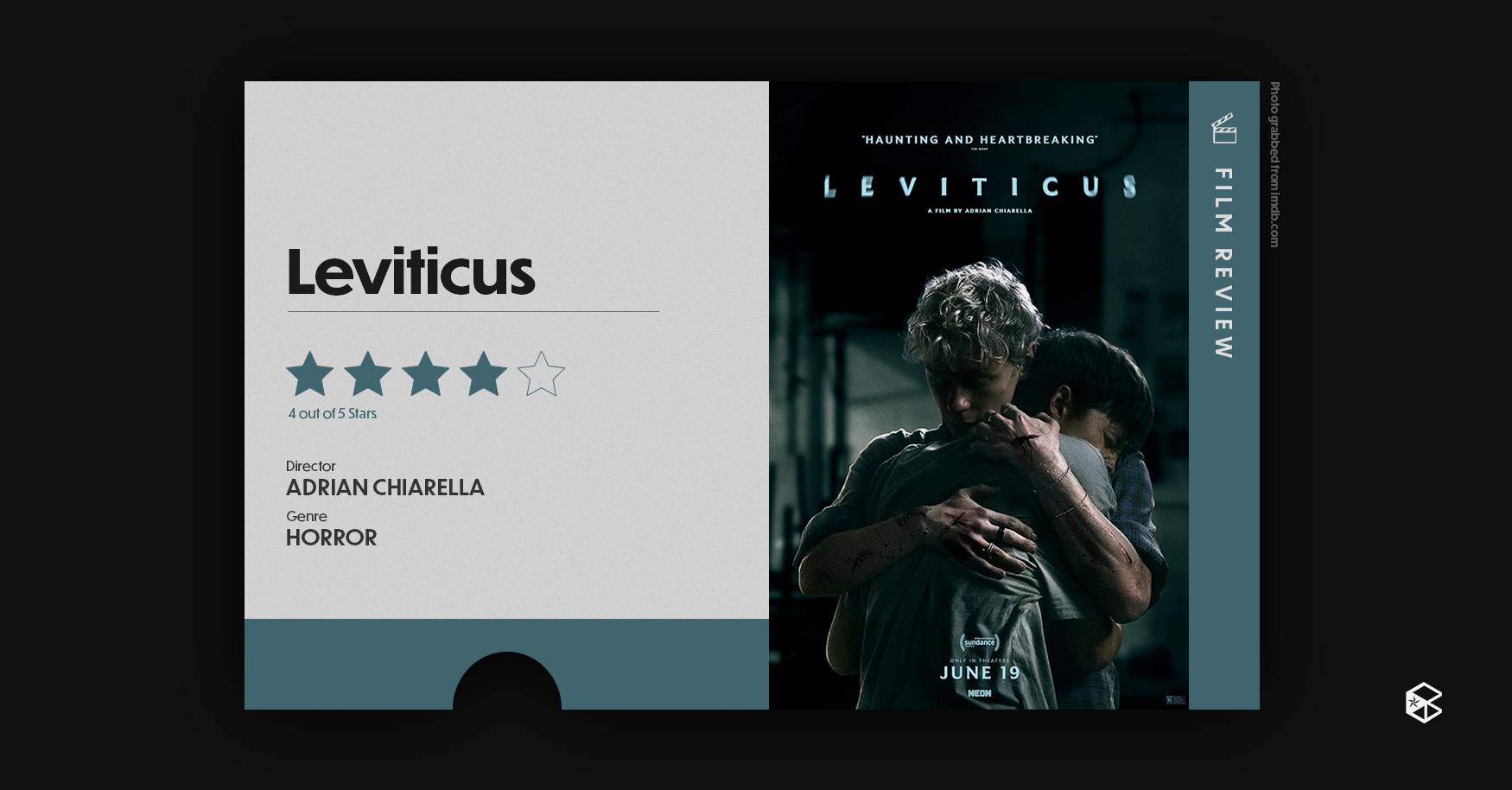




Rating: 4/5 stars
Marking the feature debut of writer-director Adrian Chiarella, Leviticus was released in Philippine cinemas on July 1, blending horror, drama, coming-of-age, and tragic queer romance into an unsettling reflection on desire, shame, and faith. Set in a deeply conservative Christian town, the film follows Naim (Joe Bird), who quietly falls in love with his best friend Ryan (Stacey Clausen).
After their families force them into a cult-like conversion therapy, the two begin to see a demonic entity that wears the face of the person they desire the most: each other. What begins as an intimate coming-of-age story quickly transforms into a horror narrative, asking a devastating question that lingers long after the credits roll: Is fear stronger than love?
Shame becomes the monster
The film opens with Naim and Ryan roughhousing, a moment that gradually shifts from aggression into quiet intimacy as they begin to recognize their feelings for one another. When circumstances expose their bond, that tenderness is immediately met with surveillance, shame, and religious control, setting the foundation for a horror story where the greatest threat is not the supernatural, but the fear of being seen.
Religion and horror have long shared a close relationship, often using the supernatural to expose the power that belief holds over people. Leviticus continues that tradition by making conversion itself the film’s true antagonist. Rather than portraying conversion therapy as emotional abuse, Chiarella externalizes its psychological violence into something tangible.
As the friends’ affection grows, so does the monstrous presence stalking them, turning desire into something terrifying and punishing every expression of their forbidden love. Through its biblical imagery, the film transforms centuries of religious shame into a literal monster, suggesting that the real horror is never love itself, but the fear of being condemned for it.
A love story beneath the horror
“They want us to be scared of each other.” This single line stated by Ryan becomes one of the emotional heartbeats of the film. It suggests that hatred doesn’t end with people who spread it. Over time, it stops feeling like something imposed from the outside and becomes a burden its victims begin to carry within themselves. Love becomes a disease, passion becomes pain, and desire becomes a threat to flee from.
The abandoned factories, empty sidewalks, stolen kisses and anxious glances become sanctuaries where privacy feels safer than belonging, until even those spaces become consumed by fear. In Leviticus, horror is not confined to the monster lurking in the dark, but extends to the way shame transforms intimacy into a secret that must remain hidden.
Perhaps the film’s greatest achievement is how romantic it remains despite its horror. Beneath every frightening image lies a tragic love story. Naim and Ryan are not running away from each other due to fear; they are running because they love each other. As the story unfolds, choosing love becomes an act of resistance, even when that choice threatens survival itself. The story reveals how two people can love each other completely and still become each other’s ruin. It’s not because their love is flawed, but because the world surrounding them refuses to let affection be enough.
In doing so, Leviticus becomes one of the most devastating metaphors for queer love in recent memory, reminding audiences that queer stories become so affecting because they celebrate the beauty of love while confronting the forces determined to suppress it.
Love above fear
The film’s biggest weakness lies in its brisk pacing. At just 88 minutes, some of its most important relationships and conflicts could have benefited from a little more room to breathe.
Ryan’s perspective, in particular, was underexplored; spending more time with his quiet yearning would have been even more heartbreaking. The same can be said for the priest, whose role as one of the story’s main antagonists is introduced and resolved rather quickly. Even so, these shortcomings don’t overshadow what the film accomplishes. If anything, it simply leaves the audience wanting more.
Despite those shortcomings, Chiarella delivers an impressive debut that understands the emotional power of queer horror. More than a supernatural thriller, Leviticus is about the violence of shame, the weight of religious trauma, and the impossible choice between survival and love.
Without spoiling the moment itself, the film’s final needledrop deserves its special mention. Arriving at precisely the right moment, it elevates the emotional weight and transforms the film’s final moments into something unforgettable.
Long after the credits roll, the film leaves behind one enduring truth—even when fear, hatred, and grief seem to prevail, love remains the one thing they can never truly erase. After all, love always wins.
Catch Leviticus with its exclusive return to SM Cinemas nationwide beginning July 22.
