
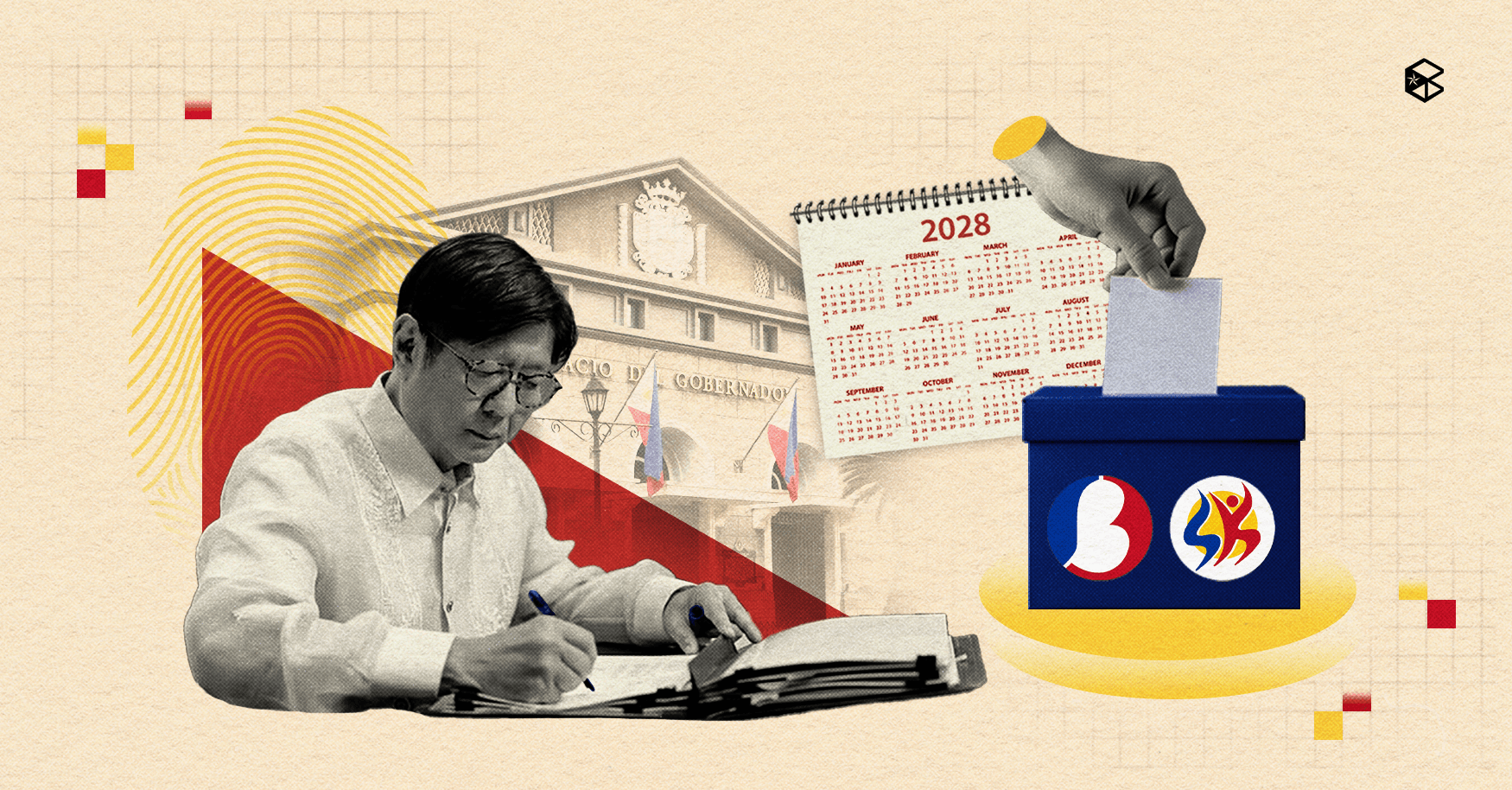




President Ferdinand “Bongbong” Marcos Jr. signed Republic Act No. 12326 on Sept. 24, postponing the BSKE from November 2026 to 2028. The postponement extended the terms of 2023-elected barangay and SK officials by two years, and fixed future terms at five years.
Election lawyer Romulo Macalintal filed a petition before the Supreme Court (SC), arguing that postponing the elections “under the guise of fixing the officials’ term of office” infringes on the electorate’s “right of suffrage.” As of Oct. 7, the Court has yet to rule on Macalintal’s challenge to the law, with the national government urging it to uphold the five-year term and dismiss the petition.
The Commission on Elections (COMELEC) had already stopped the filing of certificates of candidacy once the law took effect. However, preparations had already been underway with Chair George Garcia saying that the poll body was at “9 out of 10” in its readiness, having already spent at least ₱8 billion for the 2026 polls.
Thus, the latest postponement raises questions: Why delay the elections despite preparations already underway? How long can officials remain in office without a fresh mandate? And what are the implications of the rescheduled BSKE after the 2028 national elections?
What the law says
RA 12326 set the term of barangay and SK officials at five years, scheduling the BSKE every five years from November 2028. Incumbents cannot run for the same post in 2028. Likewise, it directs the Department of the Interior and Local Government (DILG) and other agencies to set up training programs for officials.
The legal challenger
Macalintal filed a petition for certiorari and prohibition, asking the SC to void the law as a grave abuse of discretion and block its enforcement. The petition asks for a temporary restraining order, or status quo ante order against RA 12326, and an order for COMELEC to continue its preparations.
Alongside violating voter’s rights, he further stated that all the delays “[...] Combined translates to three long years where millions of Filipino voters are stripped of their fundamental right of suffrage, governed instead by local officials effectively thrust upon us through legislative appointment rather than the ballot.”
He questioned the Palace’s reasoning: “If the importance of barangay officials justifies a postponement, [...] this postponement will never end," he alleged on how the law is a ‘political consideration’ for lawmakers who want barangay support in the 2028 elections.
The Palace’s defense
RA 12326 was made immediately executory. In signing the measure, Marcos stated that officials should use the extra time to improve service and finish ongoing programs. After Macalintal filed his petition, Malacañang replied that it would follow the SC's ruling. In conjunction, during the Senate deliberations, Sen. Francis “Chiz” Escudero reiterated that the five-year term would make the system more stable.
However, Garcia stated that COMELEC cannot wait for the SC as the law is already in effect and must be followed unless the Court issues a restraining order. Spending on an election that will not happen "would be malversation of public funds," he said. He also urged Filipinos to register as voters, whether or not the BSKE goes ahead. "Registration is always the first step before voting," Garcia said.
The cycle of postponements
This delay is not an isolated development—it is part of a series of delays. The first was RA 11935, which moved the polls from Dec. 5, 2022 to Oct. 30, 2023. Macalintal challenged it, and on June 27, 2023 the SC declared it unconstitutional, ordering the Oct. 2023 elections to proceed.
The second delay was RA 12232, which moved the polls from Dec. 1, 2025 to Nov. 2, 2026, gearing to lengthen barangay and SK officials’ terms from three years to four. Macalintal challenged this as well, arguing it was passed “merely on account of the perceived shortness of the incumbent BSK officials' term of office.”
Teacher John Barry Tayam, a group of voters led by Mystro Yushi Fujii and lawyer Alberto Hidalgo, likewise filed petitions, arguing that the law ignored the guidelines on postponements set in the 2023 case of Macalintal v. COMELEC.
On Nov. 11, 2025, the SC upheld the law, ruling that Congress may set the length of barangay terms and that the law "neither abolishes nor indefinitely suspends" the BSKE.
Concerns about accountability
Senator Vicente “Tito” Sotto III said he was “not convinced” the postponement was needed. During interpellations on the bill, he asked whether it would deny voters the chance to choose their leaders, and whether the delay amounts to “gerrymandering” in favor of certain political groups.
Sotto then cited a string of cases against barangay officials since 2023, from the Ombudsman’s dismissal of 12 Iloilo officials for alleged scheming in the Assistance to Individuals in Crisis Situations (AICS) program, to criminal and administrative complaints in Lapu-Lapu City and Manila.
Yet these cases have done little to diminish the appeal of these posts. The punong barangay can enforce ordinances, approve contracts, and direct community projects. Beyond honoraria and benefits—including bonuses, medical coverage, and tuition assistance—these positions confer tangible influence over local affairs.
The 2028 elections
The new BSKE date falls after the May 2028 national elections. Marcos signed the law on Sept. 24, just three days before candidacy filing was set to begin.
Professor Roland Simbulan, head of the Center for People Empowerment in Governance (CenPEG), said that lengthening the current barangay set-up gives the administration "additional time to consolidate relationships and political machinery at the grassroots." He stated that barangays are closest to the people; their officials can deliver votes, and he expects them to repay national leaders with support in the 2028 elections.
Furthermore, the August Twenty-One Movement (ATOM) called the postponement ‘undemocratic and against the spirit of democracy.’ "You don't just postpone elections to suit your political plans," it said.
ATOM noted that "Marcos and Duterte normalized this with three postponements each during their respective terms. But let it be put on record that this is not normal in a democracy."
What happens next?
For now, the 2028 BSKE remains in place while the SC has yet to announce a ruling. COMELEC has halted preparations, and incumbent officials remain in office.
For Filipinos, the cost is over ₱8 billion and five years without a ballot. Voters last chose their leaders in October 2023, and won’t do so again until November 2028. An official who fails their community cannot be voted out in the meantime. And with polls now fixed at five-year intervals, the next BSKE after 2028 falls in 2033.
The SC’s ruling will decide whether voters get their 2026 ballot back or live with the long wait as the new normal.
