




Following a successful run of the 2017 Philippine Pavilion in the 57th International Art Exhibition of the Venice Biennale in Italy, The Spectre of Comparison returns to Manila for the homecoming exhibition at the Museum of Contemporary Art and Design (MCAD).
The 57th International Art Exhibition of the Venice Biennale is an art exhibition held every two years that showcases the incoming art trends while simultaneously presenting the artists and creations that make an impact on the different facets of the international art scene at each era of modern history.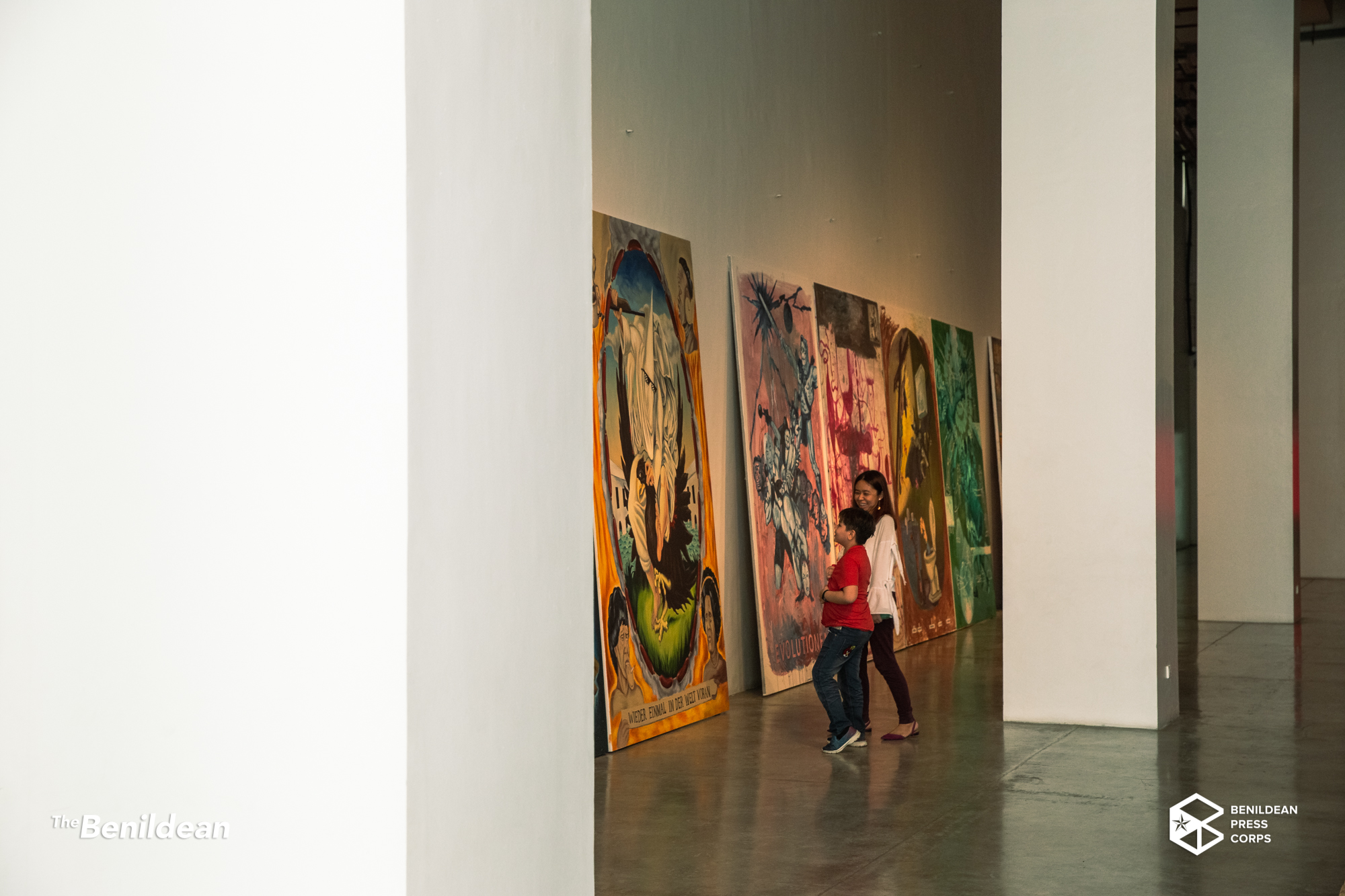
Photo by Kyle Bustos
Curated by MCAD Director Joselina Cruz, The Spectre of Comparison, which opened last May 23, features the works of Filipino artists, Lani Maestro, whose works consist of interactive, thought-provoking installations, and Manuel Ocampo who tackles provocative and taboo topics with his larger-than-life comedic paintings.
With the comparison to the experience of Crisostomo Ibarra, the protagonist of Jose Rizal’s Noli Me Tangere, seeing the botanical gardens of Manila while remembering Europe at the same time, Maestro and Ocampo are immigrants who have reflected their experiences through art. The Occident, colloquially known as the Western world or the West, shows both sides of a coin as it can be a place of harm and of refuge. Shaping the complex and contemporary Filipino identity through the new diaspora of today, the exhibition gives a clear picture of how colonialism and acculturation greatly influenced the current Filipino identity.
Identity exhibited through art
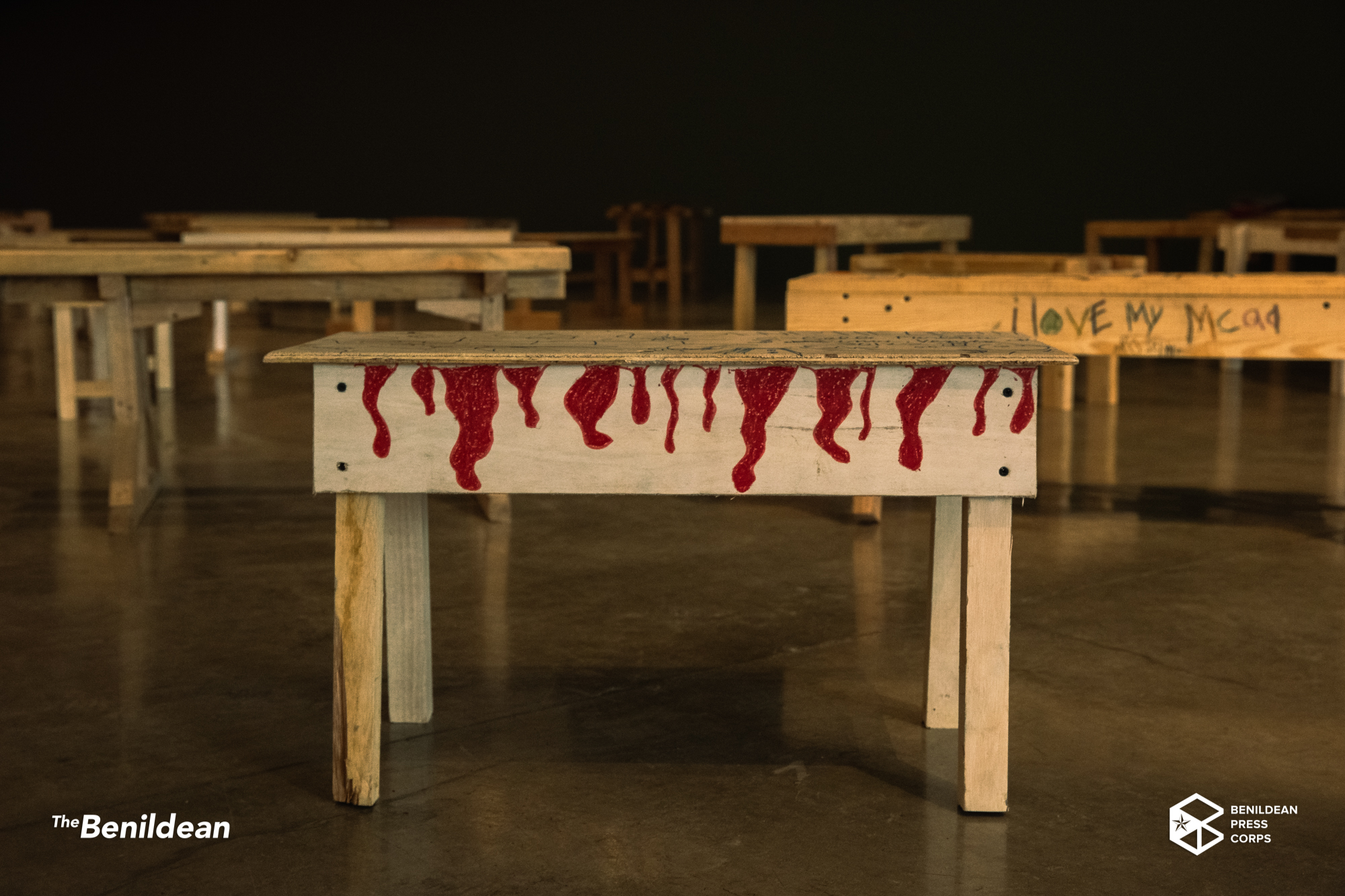
Photo by Kyle Bustos
An installation piece with blue neon light, these Hands (2017) by Maestro with the text, “if you must take my life, spare these hands,” speaks of the pivotal body part of an artist.
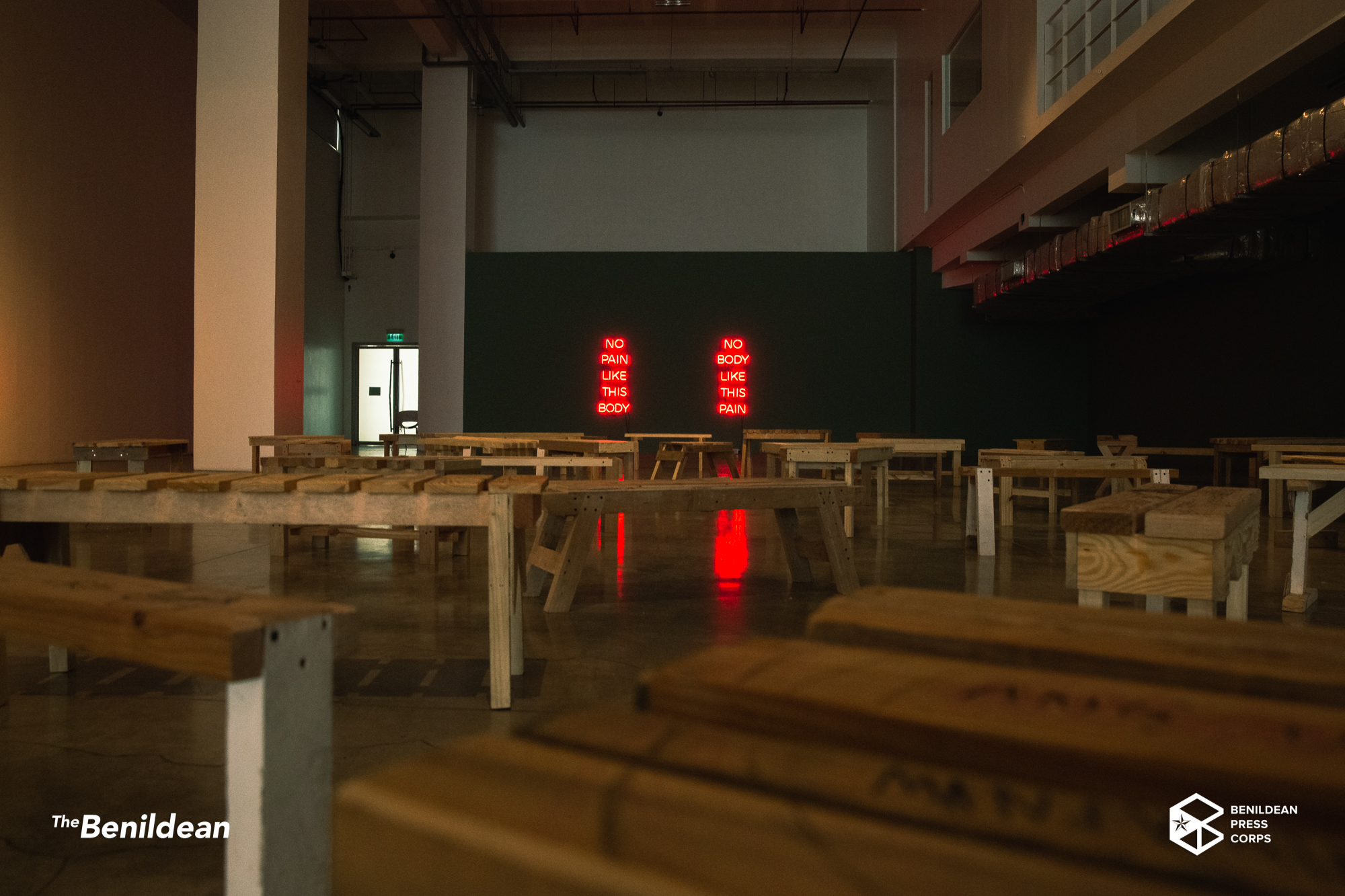
Similarly styled, with its bright red neon lights, Maestro’s No Pain Like This Body is an installation piece with the message, “No pain like this body. No body like this pain.” Standing in two human-sized columns, this illustrates the lengths of human strength, endurance and resistance to pain, which Maestro was inspired to create after witnessing the harshness of life in Downtown Eastside, Vancouver.
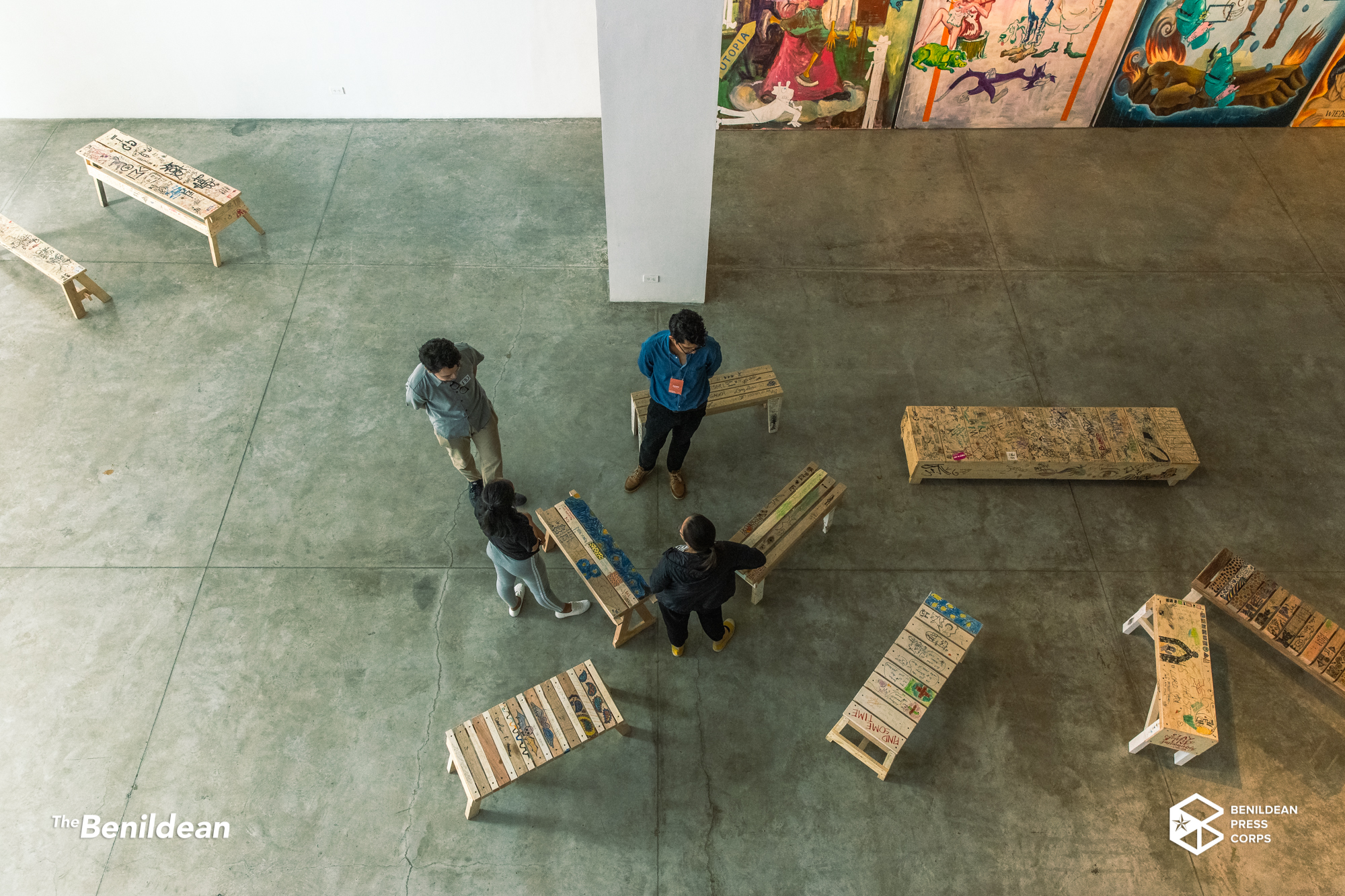
Situated in front of No Pain Like This Body, Meronmeron, is a collection of benches that portrays how Filipinos value the self, the environment, and human interaction. This piece was not meant to simply be viewed, but rather, to be interacted with. Inspired by the renowned Venetian designer Enzo Mari and his style of rough construction, the benches were given an extra highlighting quirk by the various writings on its surfaces, written by artists and audiences alike—some bearing the most sincere life advice, while others crack the simplest of jokes.
Meanwhile, Maestro’s newly showcased An Unconventional Lullaby (2019) is an installation that seeks comfort and calmness through a lullaby playing through a speaker beneath the wooden bed.
In contrast to Maestro’s texts are a collection of high-energy paintings by Ocampo that depict colonialism in the Philippines. Amidst the numerous layers and bright colors, issues of oppression and religion alike are tackled.
One such painting is Torta Imperiales (2019) which juxtaposes the spanish word “tortazo” (a slap to the cheek) with imperiales (a Spanish sweet). This is illustrated by three skeleton figures seemingly out on a leisurely stroll, against a smudged white background surrounded by bright pink shapes. This represents the artist’s slap to the kind of artwork they have critiqued in the past.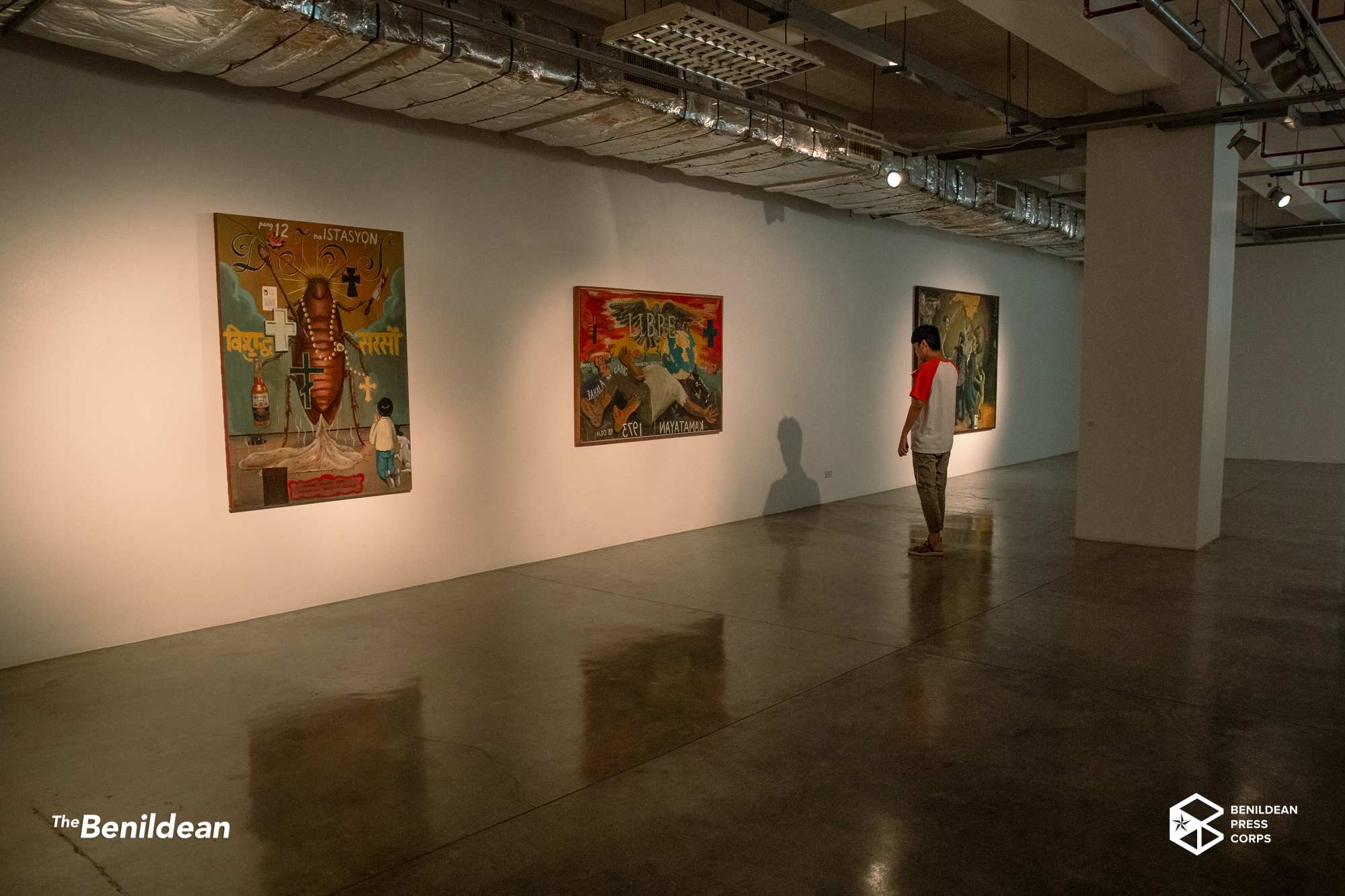
Photo by Kyle Bustos
Ocampo’s style as an artist is exceedingly expressive and, at times, comical while still delivering a powerful message. A prime example of this would be Ocampo’s Twelfth Station (1994) which depicts a humongous cockroach in the place of Christ as the final station on the way of the cross—a nod to Filipino religious practices.
In addition, Ocampo also included Untitled (1994) and Why I Hate Europeans (1992), both of which depict the imbalance between the Filipinos and Europeans. Untitled depicts a brown body crushed by the world itself, while Why I Hate Europeans portrays the chaos of the citizens of the Occident.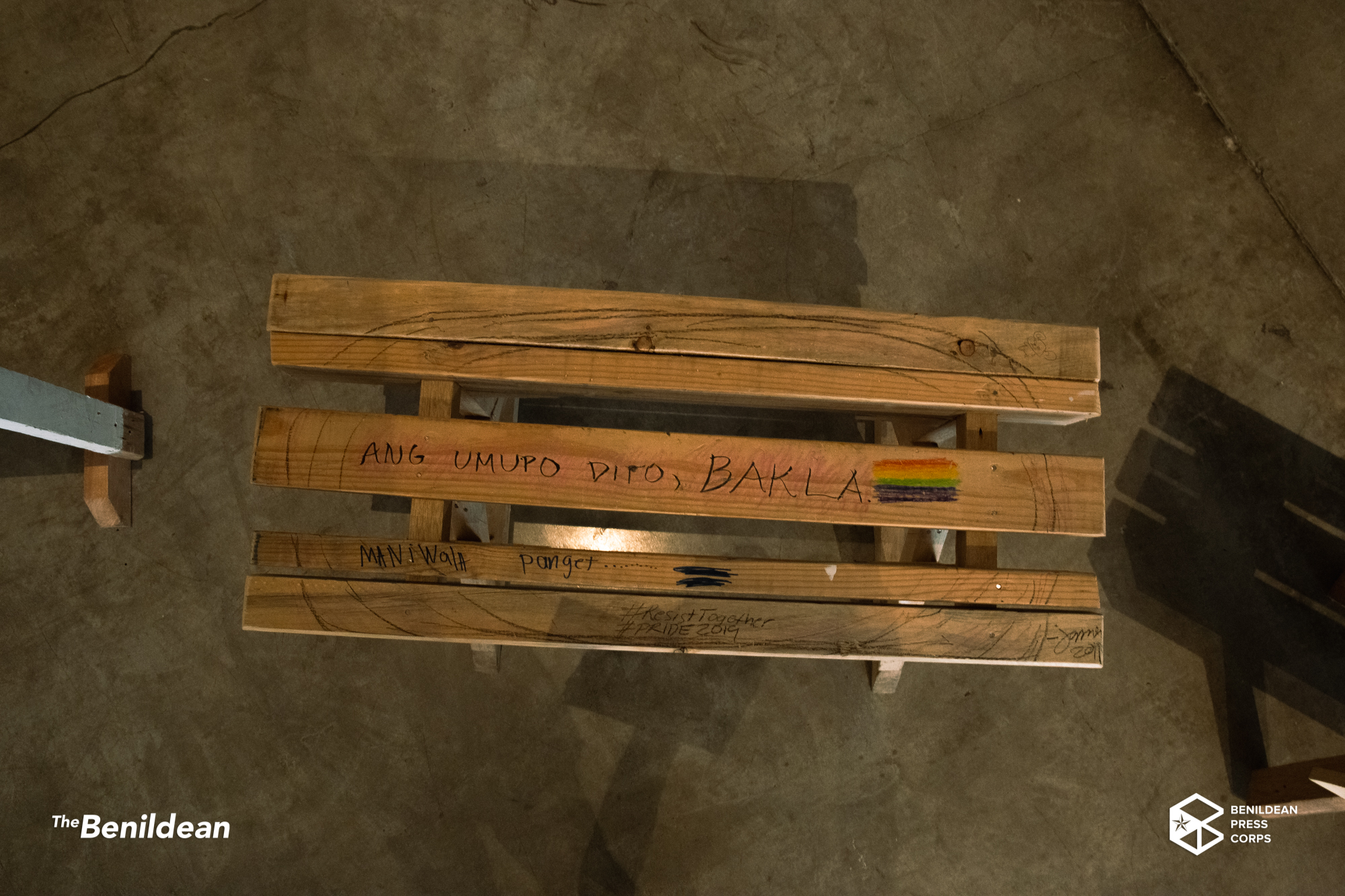

Photos by Kyle Bustos
What The Spectre of Comparison brings is a testament to the growing liminality of Filipinos to the culture of the Philippines. It shows audiences of how the lines between the Occident and Orient increasingly blur and serve as a reminder of how cultures are ever-evolving.
The exhibit, located at MCAD along Dominga Street, will run until July 20, 2019. It is done in cooperation with the Department of Foreign Affairs, the National Commission for Culture and the Arts, and the Office of Senator Loren Legarda.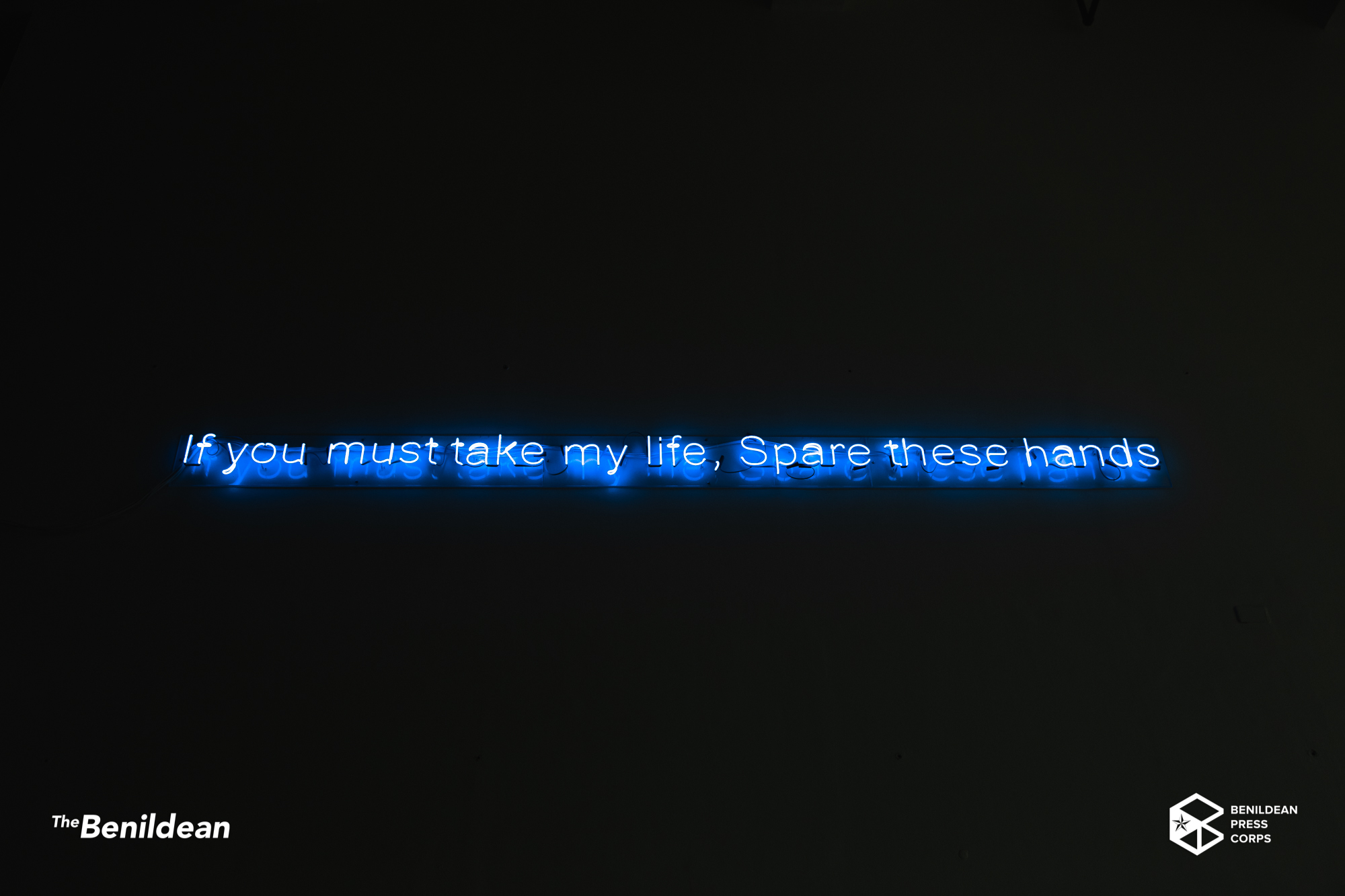
Photos by Kyle Bustos
