
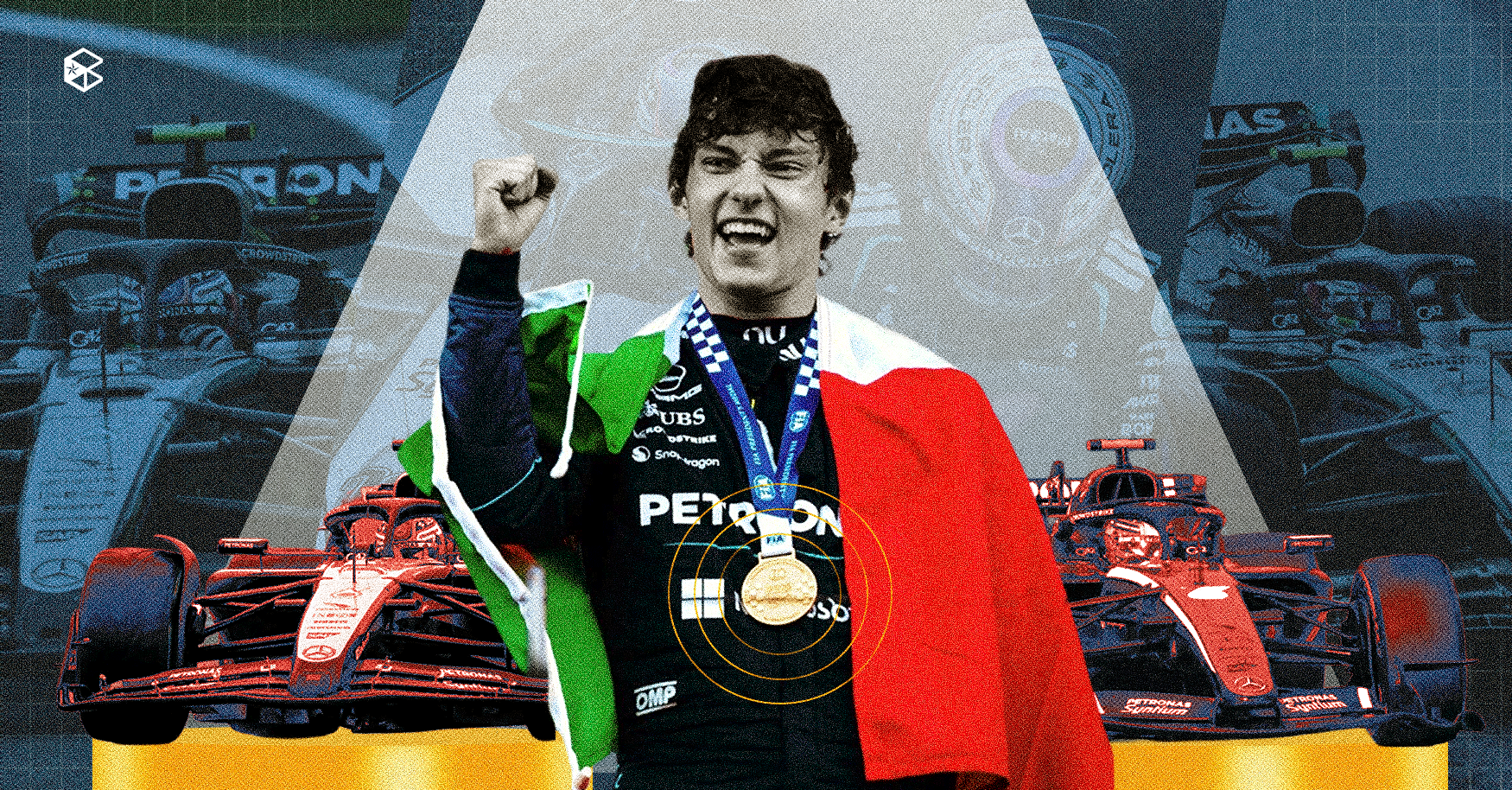




Kimi Antonelli etched his name in history as the youngest Formula 1 World Champion, clinching the 2026 World Drivers’ Championship with Mercedes-AMG PETRONAS Formula One Team after garnering 15 points in his 3rd-place finish in the Mexico City Grand Prix.
Historic milestones
At just 20 years old, Kimi Antonelli’s World Champion status smashed Sebastian Vettel’s record of winning at 23, becoming the first Italian to win the title in 73 years since Alberto Ascari.
He became the sport’s youngest record-breaker in multiple facets, including winning from pole position and leading the championship standings. He also achieved a grand slam, which is when a driver starts from pole position, sets the fastest lap, and leads the race from start to finish, ultimately sealing the win in one weekend.
Antonelli, who qualified for 5th place in the Mexico Grand Prix, eventually started as 4th after Max Verstappen from Oracle Red Bull Racing received a 1-place grid penalty. He only needed to finish in 9th place to secure the 2026 Drivers’ Championship with four races left in the season.
Verstappen claimed his third victory of the season after holding off Lewis Hamilton, and Antonelli's 3rd place finish proved equally significant as the young Mercedes driver demonstrated the composure and consistency expected of a seasoned contender.
Beyond his years
Competing for only two years in the premier racing series, Antonelli has already shown his ability to challenge established champions and consistently deliver results under pressure.
His championship title was not the first time that he made headlines with his dominance. On Sept. 6, 2026, at the Monza Circuit in Monza, Italy, he had a stunning home victory after starting from 19th on the grid, becoming the first Italian driver to win on home soil since 1966.
Antonelli’s progress also brought attention to a growing generational divide within the sport. Younger drivers appear to be finding rhythm under the new regulations, as several established names face challenges adapting to the changing characteristics of the cars.
His successes have proven to be more impressive given the major technical and regulatory changes introduced this season, where racers had to adjust their driving styles and rethink their approaches to the game.
A new generation arrives
Antonelli’s breakthrough is more than a personal milestone—it could signal the arrival of a new generation ready to challenge the established order. He raised the expectations for what young drivers can accomplish and challenged the notion that greatness in F1 must come only after years of competing at the highest level.
As the sport continues to evolve, so will the qualities that one needs to possess in order to succeed. New regulations, changing technologies, and an increasingly competitive grid will continue to test the limits of every driver, regardless of experience or reputation.
The league may be entering a new era, but the question is no longer simply about who has the experience to lead i—rather, who possesses the vision, resilience, and adaptability to shape its future.
Is Antonelli the beginning of a generational shift, or is his championship a reminder that greatness has never been defined by age alone? The future of F1 is no longer something the sport must wait for, with Antonelli being at the front further proving that it has already arrived.
